
Driveways & sidewalks in Bellevue: what to know
Grade is the first measurement on a Bellevue approach. Many lots drop away from the street, or climb toward a house on a bank, and the rise over the length of the drive sets how the slab is formed. We take the rise at the far edge of the slab, not only the length of the run, because that figure shapes the forms and the drain route.
A new drive, or one replaced in full, can reach two sets of city rules. Bellevue’s residential right-of-way permit may cover driveway installation and driveway reconstruction or relocation, so the apron and curb cut are reviewed on their own track. A drive built on a slope that meets all three of the code’s steep-slope tests (40 percent or more, a rise of at least 10 feet, and more than 1,000 square feet of area) may come under the critical-area rules, so we check the slope before the cut.
Permits and rules in Bellevue
Two checks come first: whether the work reaches into the public right-of-way, and whether the lot has a slope that meets the critical-area tests. We confirm both for the parcel before a price goes out. The curb cut is priced as its own line, because its review runs on a different timeline from the slab. Slab height and the ground beneath the drive are recorded on site, so the permit answer rests on measured figures.
Bellevue’s permit FAQ requires a permit for a retaining wall over four feet high, counted from the underside of the footing up to the top edge, and for any wall supporting a surcharge load. Walls over 30 inches high must stay out of any required setback. A patio or paver set on grade needs no permit unless the earthwork passes the city’s thresholds, and that exemption does not reach lots inside the Critical Areas Overlay District. The residential right-of-way permit may cover driveway installation and driveway reconstruction or relocation. The city revises these rules, so we confirm the current requirements before work begins.
How we approach it
- Measure the rise at the far edge of the slab
- Mark every stretch that sits over a lower level or a bank
- Route runoff to a landscape strip or a catch point on the lot
- Settle the apron layout with city staff before forms go in
For the full process, see our Concrete Driveways & Sidewalks page.
Building in the cold months? See our guide to winter concrete pours.
Our driveways & sidewalks work, serving Bellevue
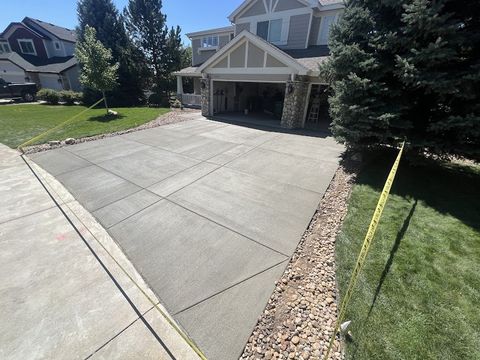
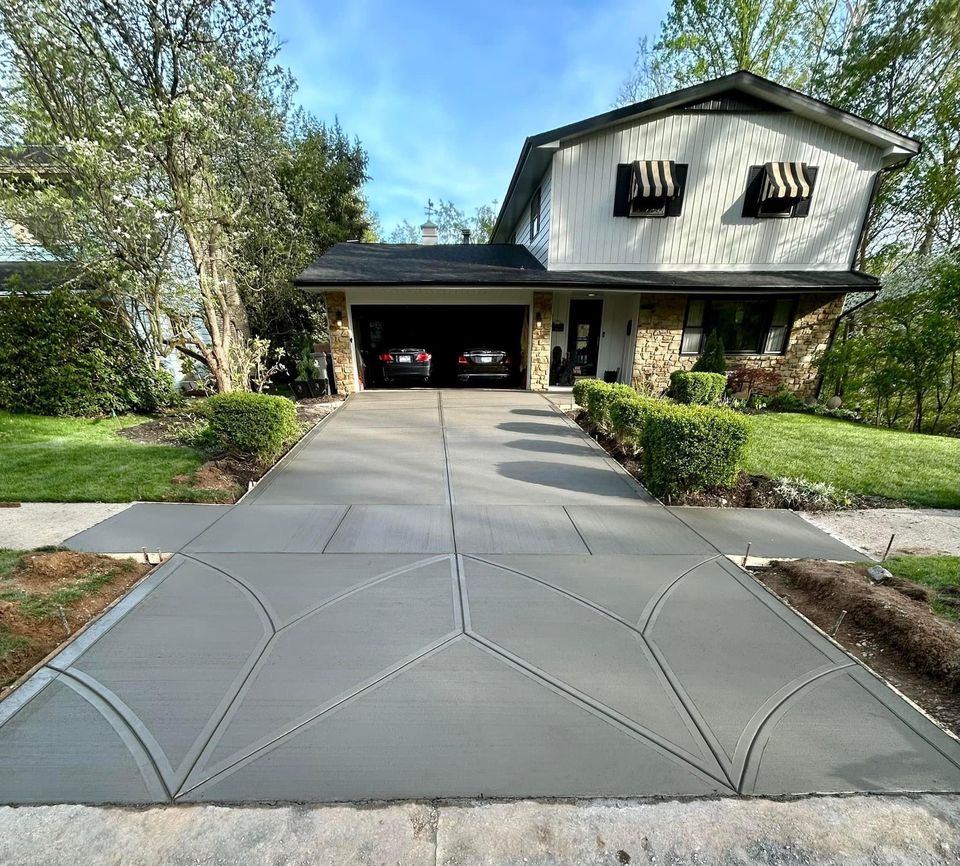
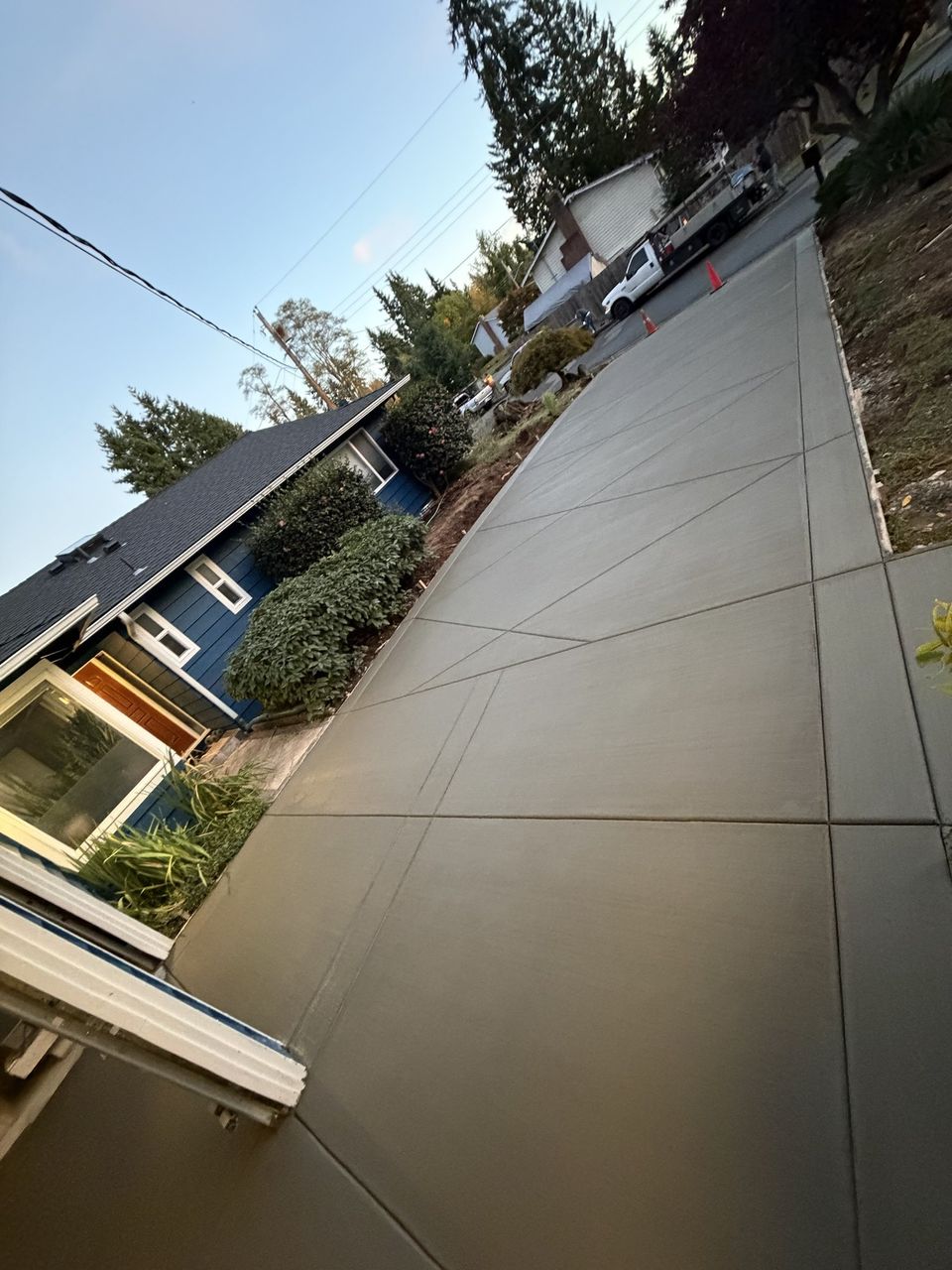


Examples of our work. We build driveways & sidewalks in Bellevue and the cities around it. See all of our work
Questions from Bellevue homeowners
Does a Bellevue driveway replacement need a right-of-way permit?
Bellevue’s residential right-of-way permit page lists driveway reconstruction or relocation among the work it may cover. Whether a given job needs that permit depends on what it touches in the right-of-way, so we confirm the scope with the city before the apron is poured.
Does a steep slope change how a Bellevue drive is built?
It can. Bellevue’s critical areas code defines a steep slope as 40 percent or more with a rise of at least 10 feet and more than 1,000 square feet of area. A drive on a slope that meets all three tests may come under the critical-area rules, so we measure the slope before the grade of the drive is set.
Can a Bellevue driveway drain onto the street?
Runoff from the drive is routed on the lot, not onto the roadway or a neighbor’s frontage, and the path is set before the slab is poured. If a path would reach the right-of-way, we raise it with city staff first.
Other work in Bellevue
- Patios & stairs in Bellevue
- Concrete overlays in Bellevue
- Retaining walls in Bellevue
- Basement waterproofing in Bellevue
- Drainage & French drains in Bellevue