
Concrete and drainage work built for Pacific Northwest rain
OT Construction builds driveways, patios, overlays, retaining walls, and drainage systems for homeowners across Pierce and South King County. Based in Federal Way.
- Registered in WashingtonL&I contractor registration OTCONCL809PA. Verify it
- Based in Federal WayServing Pierce and South King County
- 26 cities servedSee every service area
- Pouring through winterHow cold-weather pours work
What we build
Six kinds of work, planned around how water behaves on your lot.
- Concrete Driveways & SidewalksNew and replacement driveways, walkways, and sidewalk sections on a prepared base, sloped to shed water.View service
- Concrete Patios & StairsPatios, steps, landings, and outdoor living slabs with wet-weather traction and drainage planned in.View service
- Concrete OverlaysStamped, textured, or smooth resurfacing for sound slabs that look worn, stained, or outdated.View service
- Retaining WallsPoured concrete retaining walls with footings, reinforcement, and drainage designed for the site.View service
- Basement WaterproofingFind where the water comes from, then stop it at the foundation with drainage and repair.View service
- Drainage Systems & French DrainsFrench drains, curtain drains, catch basins, and tightlines designed around a proper outlet.View service
Our work
Projects we have finished, with what was built.
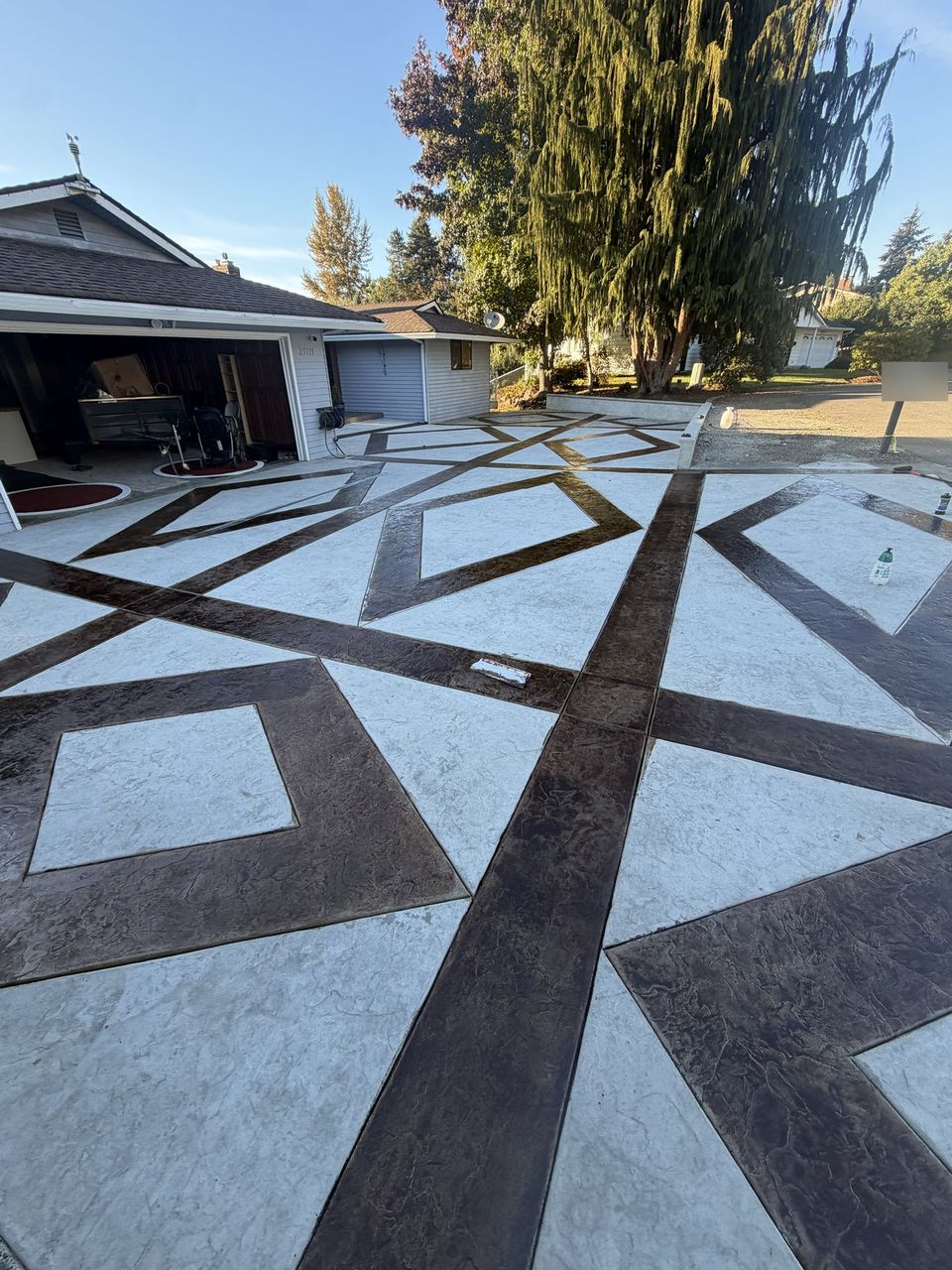
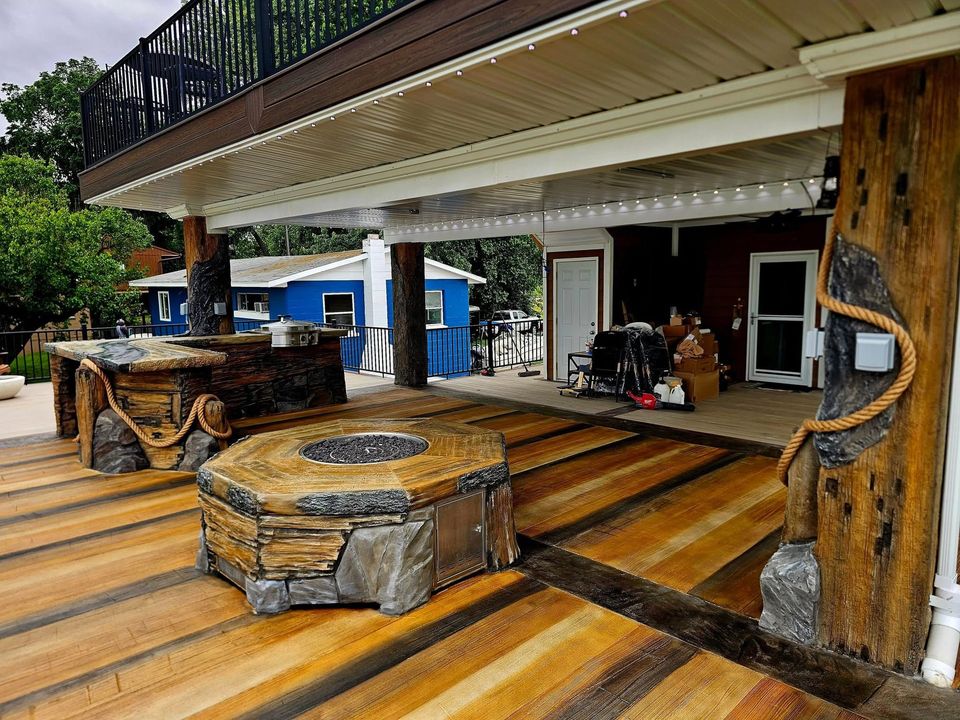
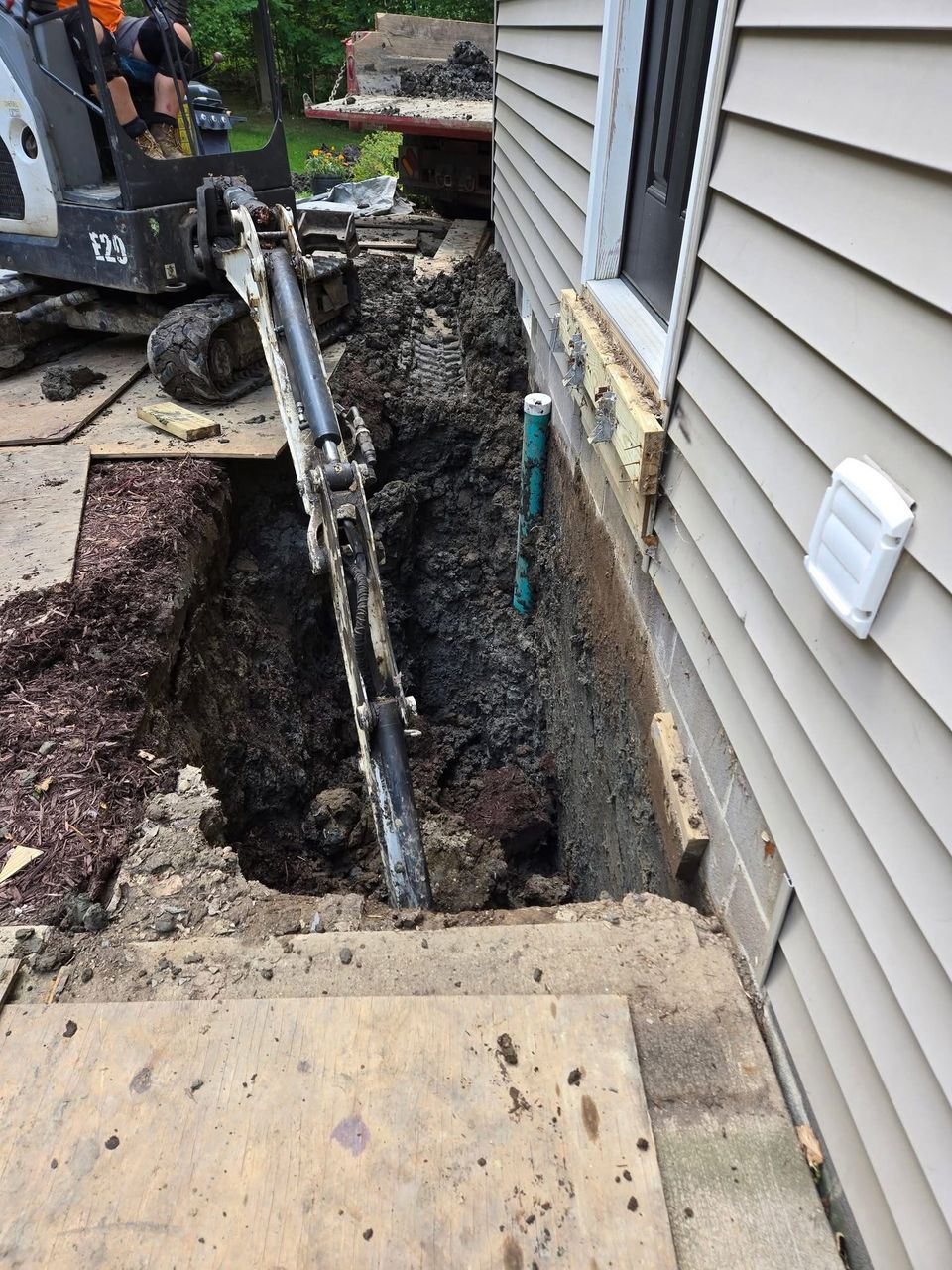
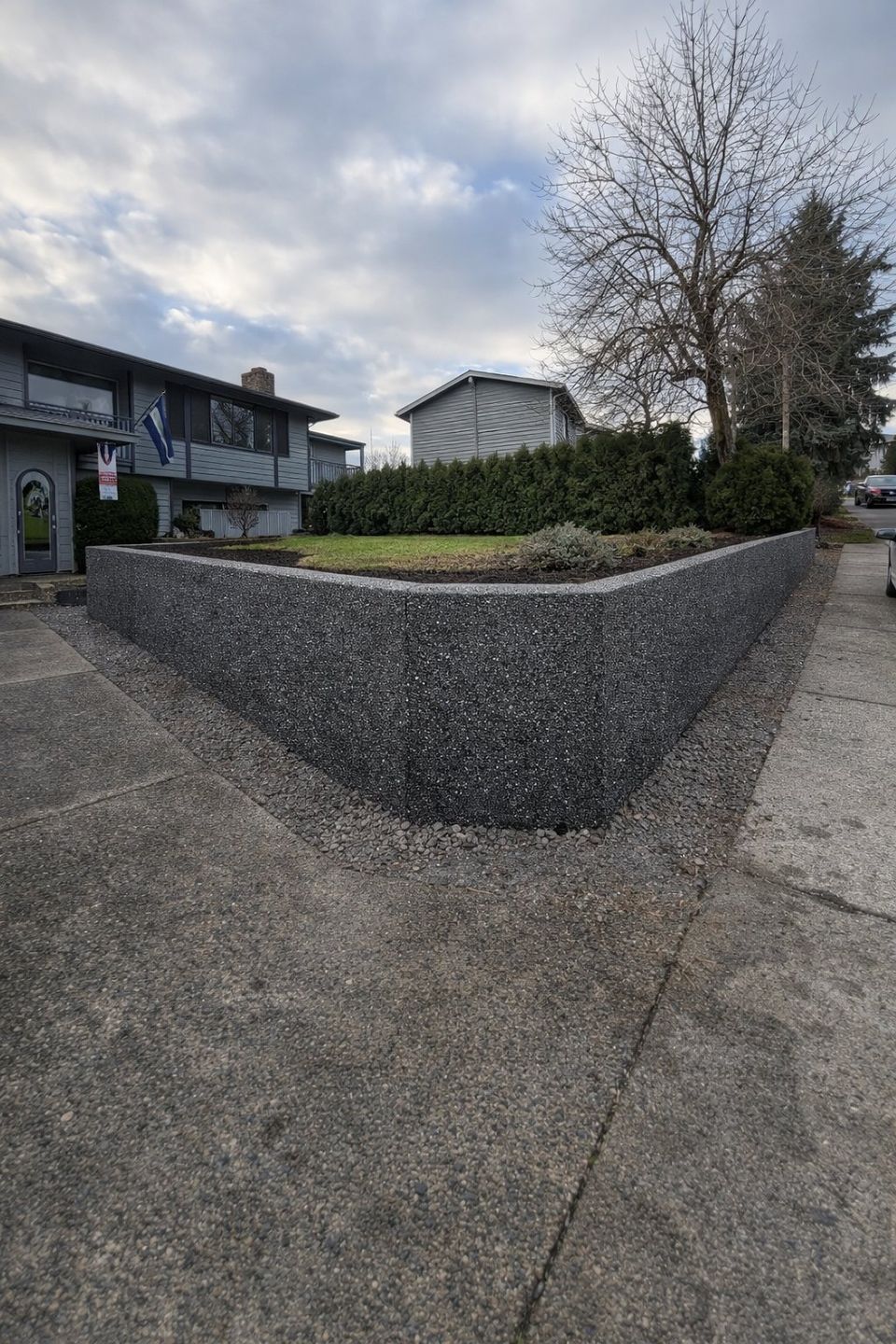
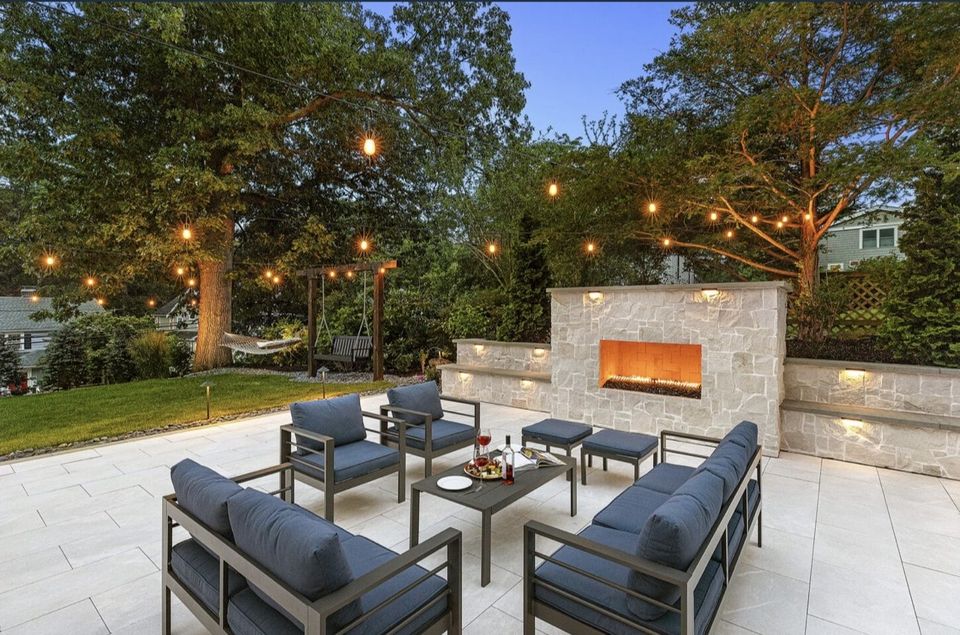
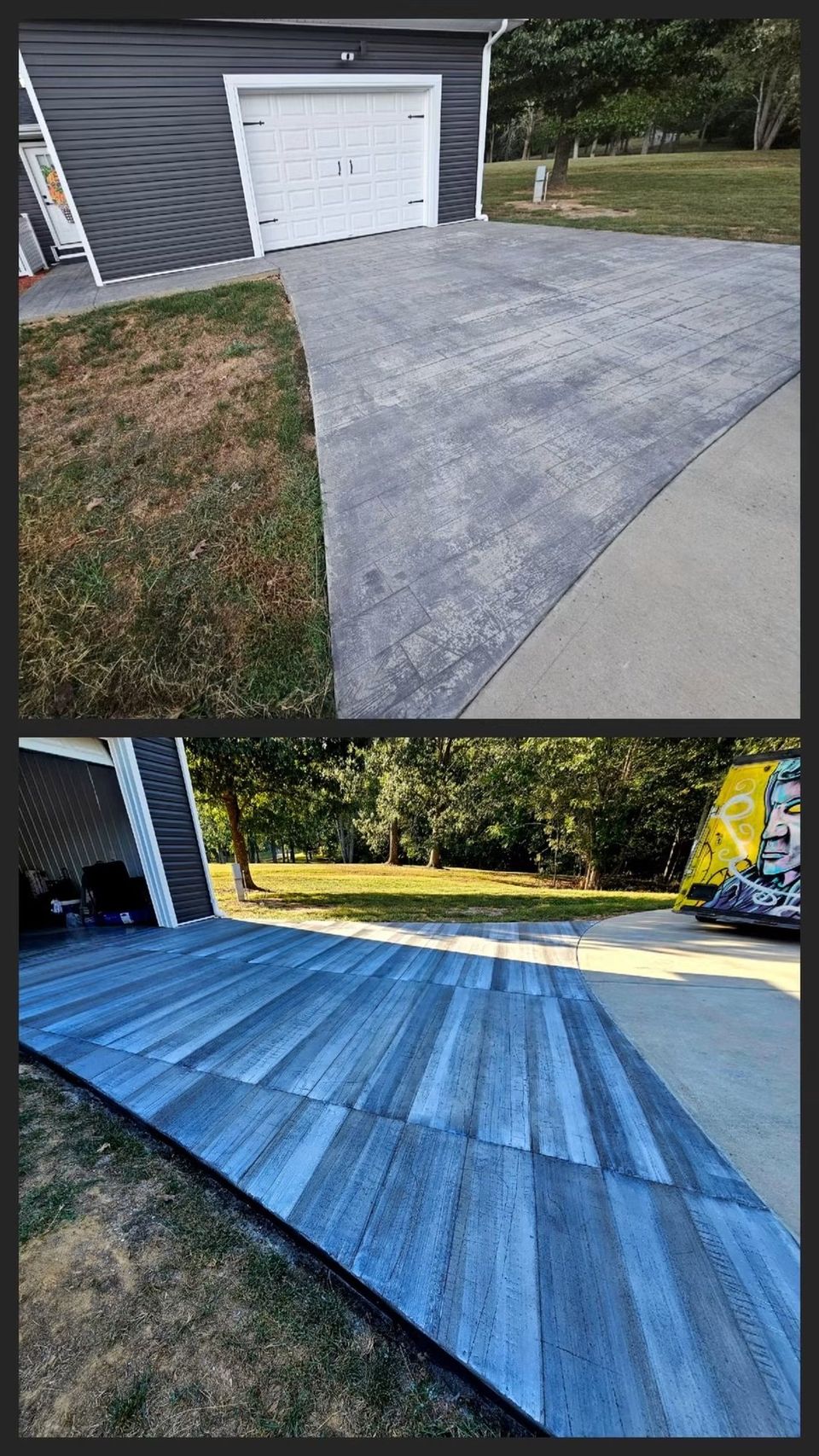


Drainage decides how long concrete lasts
Most concrete problems in western Washington are water problems. Dense glacial till under much of the Puget Sound lowland drains slowly, so rain collects in the soil above it all winter. It heaves slabs, pushes on retaining walls, and finds its way into basements and crawlspaces.
So we start with the ground. Before we price a driveway, a patio, or a wall, we look at where water runs now, where it will run after we’re done, and where it can legally go. The concrete is the part you see. The base and the drainage are the parts that decide whether it lasts.
How we work
We start with the ground
A compacted base, the right slope, and a plan for the water come first. That’s where most failed slabs and walls went wrong.
We tell you what needs a permit
Retaining walls, stairs, right-of-way work, and drainage outlets all have rules, and the rules differ from city to city. We check before we pour and tell you what applies.
We build for wet weather
Textured finishes for traction, sealers for moss and algae, and pour schedules that account for the forecast, including in winter.
From first call to finished concrete
Every job runs the same four stages, so you always know what comes next.
Site visit
We walk the property, measure the work, and look at the slope, the soil, and where water goes now.
Plan and permits
We put the scope and price in writing and check which permits or engineering the city requires.
Build
Excavation, compacted base, forms, reinforcement, and the pour, with the drainage built in from the start.
Cure and care
We tell you when it can take foot and vehicle traffic, and how to seal and look after it.
Concrete can be poured in winter
Many people think concrete can’t be poured in winter. With the right preparation, it can. We wrote a step-by-step guide to how it’s done in western Washington.
- Tent or canopy keeps rain off the finish
- Insulated blankets hold heat while the concrete gains strength
- Fresh slab, protected until it reaches about 500 psi
- Compacted base that isn’t frozen
- Rain and cold are managed separately
Where we work
Federal Way is home base. Every city with a link has its own page for each service we offer.
More cities with their own pages Tacoma, Lakewood, Puyallup, Bonney Lake, Auburn, Des Moines, Kent, Milton, Spanaway, Fife, Lake Tapps, Covington, Maple Valley, Renton, East Renton Highlands, Newcastle, Mercer Island, Issaquah, White Center, West Seattle, Burien, Normandy Park, Tukwila.
Talk to us about your project
Call or email us. We’ll talk through the work and set up a time to see the site.