
In western Washington, a concrete driveway usually fails from the bottom up: a base that held water, a slab that was too thin for the loads, or joints placed where they don’t control cracking. We build driveways, walkways, and sidewalk sections for homeowners and light commercial properties across Pierce and South King County, and most of our effort goes into what’s under the concrete.
What we build
- New driveways, widenings, and parking pads, including RV and boat pads
- Tear-out and replacement of cracked, settled, or heaved driveways
- Walkways, garage and shop aprons, and sidewalk sections
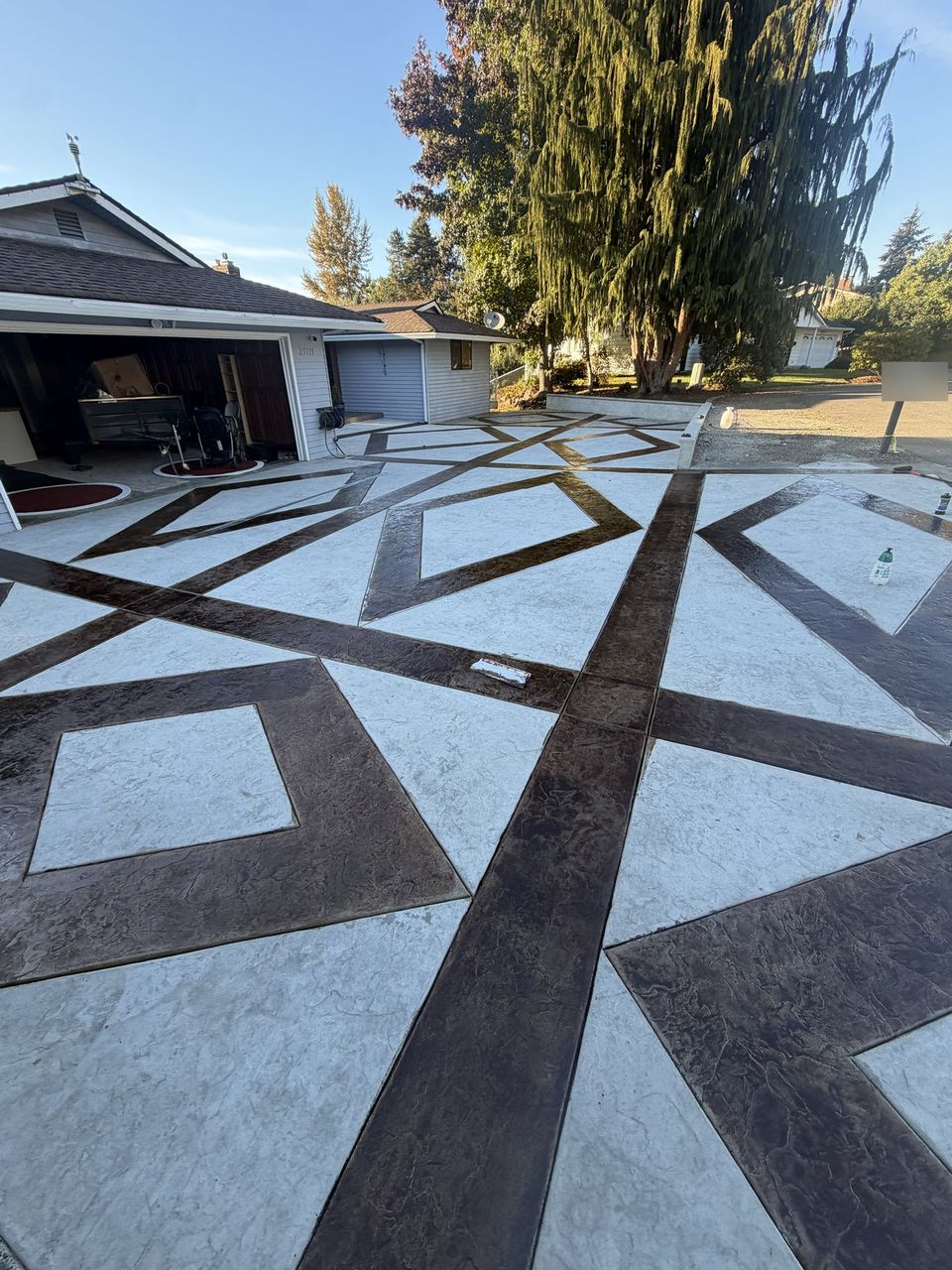
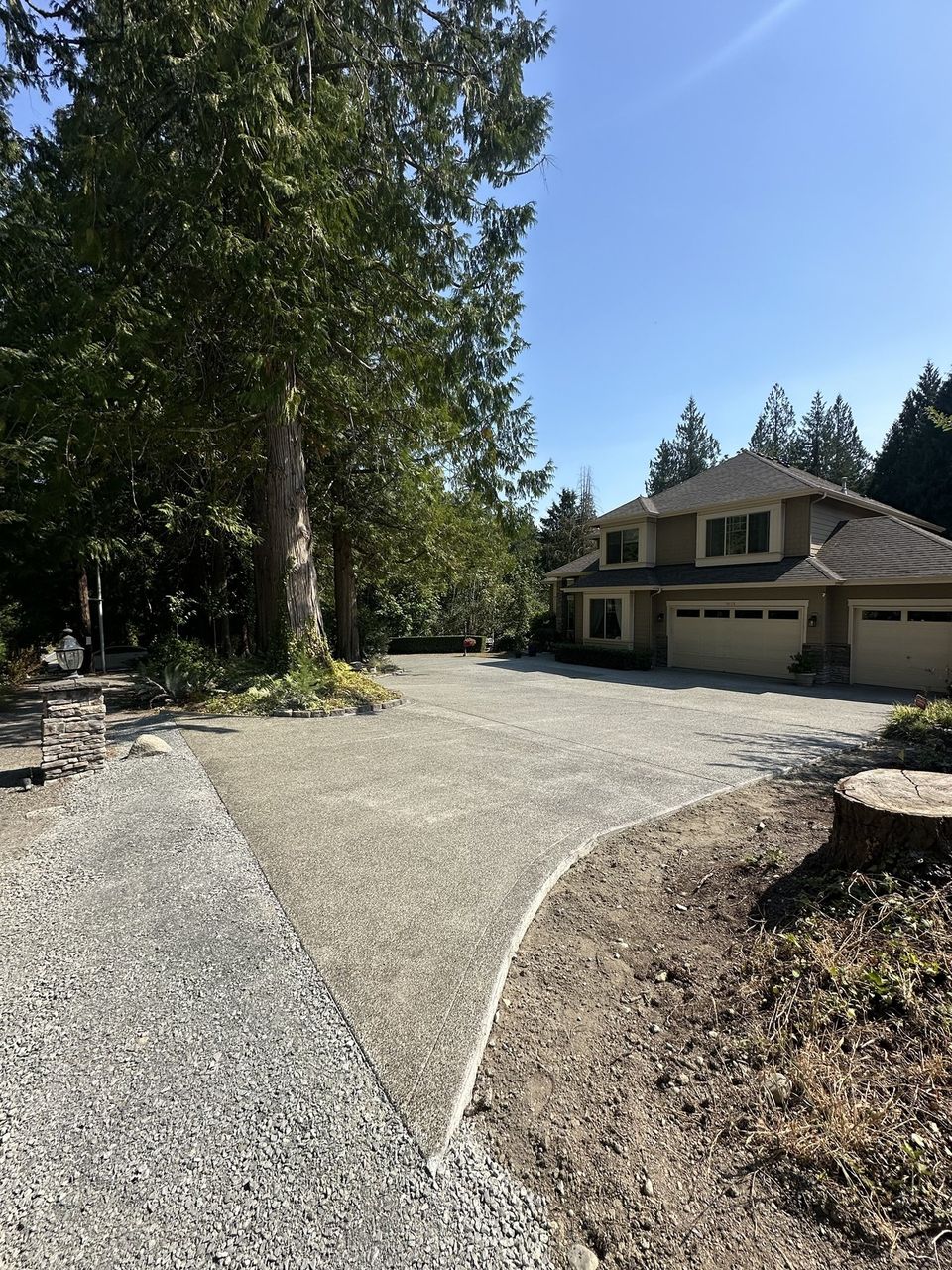
- Broom, exposed aggregate, and stamped or colored border finishes
How a driveway gets built
- Site visit. We measure, note where water runs today, and look for soft spots, tree roots, and utility lines.
- Excavation and base. We remove soft or organic soil and compact a crushed-rock base. The base spreads the load and keeps the slab from sitting in standing water.
- Forms and reinforcement. Forms are set to grade with a slope that sheds water toward a safe outlet, never toward the garage or a neighbor. Reinforcement is sized to the loads.
- Pour, finish, and joint. Control joints are planned around the layout so cracks form in straight lines where we want them.
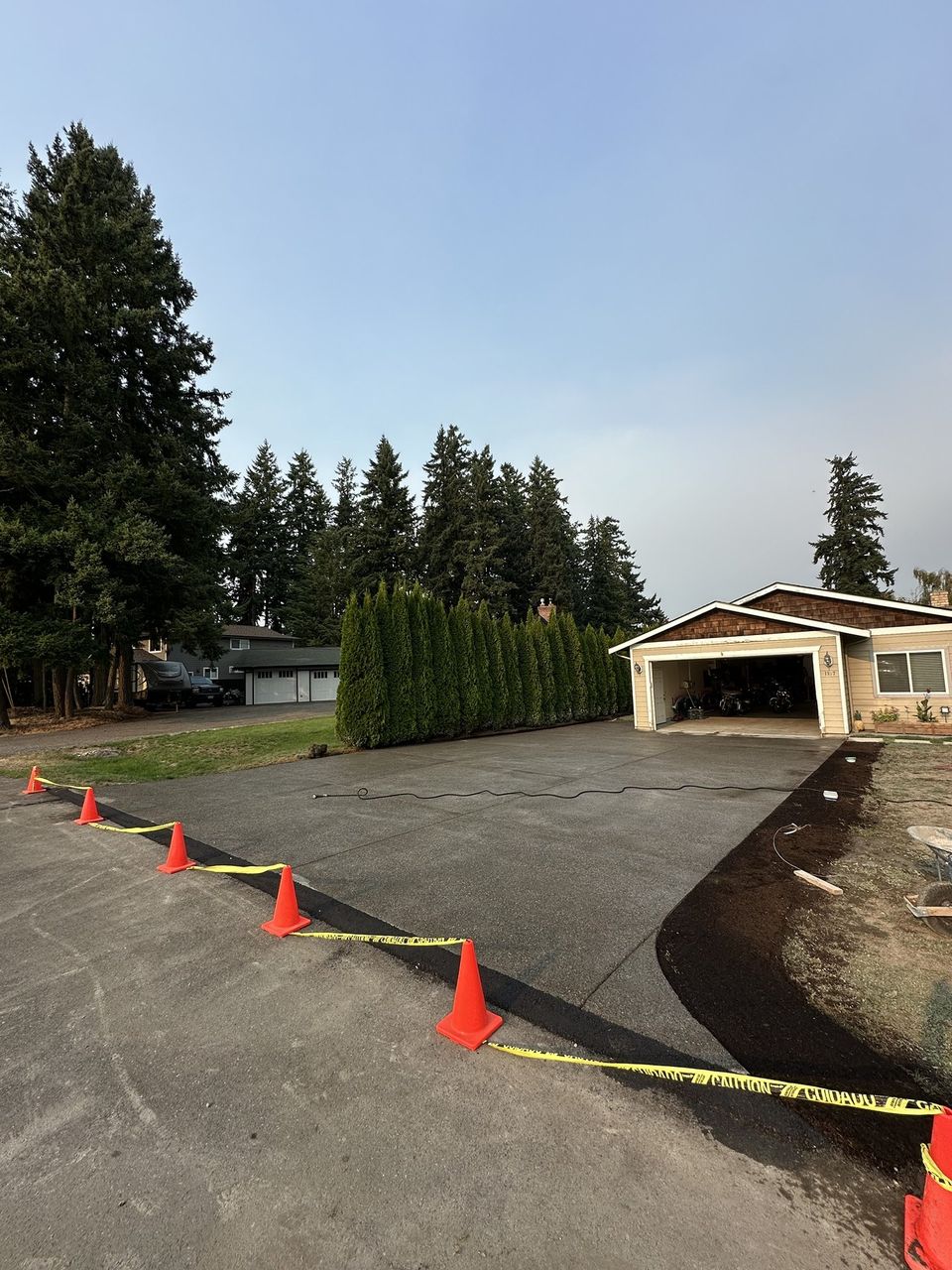
- Cure and protect. Fresh concrete needs moisture and the right temperature to reach full strength. Most driveways take foot traffic in a day or two and vehicles after about a week, depending on the weather.
Thickness, reinforcement, and finish
A typical residential driveway is about 4 inches thick. We go thicker where heavier vehicles, RVs, or work trucks will drive, and we add reinforcement based on the load and the soil underneath. For the surface, a broom finish gives dependable wet-weather traction. Exposed aggregate and stamped borders add character without giving up grip.
Sidewalks and city right-of-way
The strip between your property and the street, including the sidewalk, curb, and driveway apron, is typically public right-of-way. Work there is governed by the city, usually through a right-of-way permit, and it has to meet the city’s standards. We confirm what applies before we pour anything that touches it.
Problems we fix
- Settled or cracked slabs from a washed-out or poorly compacted base
- Sections lifted by tree roots
- Water pooling at the garage door or running toward the house
- Surface flaking from poor finishing or de-icing salts
Where we do this work
- Concrete Driveways & Sidewalks in Federal Way
- Concrete Driveways & Sidewalks in Edgewood
- Concrete Driveways & Sidewalks in University Place
- Concrete Driveways & Sidewalks in Tacoma
- Concrete Driveways & Sidewalks in Lakewood
- Concrete Driveways & Sidewalks in Puyallup
- Concrete Driveways & Sidewalks in Bonney Lake
- Concrete Driveways & Sidewalks in Auburn
- Concrete Driveways & Sidewalks in Des Moines
- Concrete Driveways & Sidewalks in Kent
- Concrete Driveways & Sidewalks in Milton
- Concrete Driveways & Sidewalks in Spanaway
- Concrete Driveways & Sidewalks in Fife
- Concrete Driveways & Sidewalks in Lake Tapps
- Concrete Driveways & Sidewalks in Covington
- Concrete Driveways & Sidewalks in Maple Valley
- Concrete Driveways & Sidewalks in Renton
- Concrete Driveways & Sidewalks in East Renton Highlands
- Concrete Driveways & Sidewalks in Newcastle
- Concrete Driveways & Sidewalks in Mercer Island
- Concrete Driveways & Sidewalks in Issaquah
- Concrete Driveways & Sidewalks in White Center
- Concrete Driveways & Sidewalks in West Seattle
- Concrete Driveways & Sidewalks in Burien
- Concrete Driveways & Sidewalks in Normandy Park
- Concrete Driveways & Sidewalks in Tukwila
See every city we serve on our service areas page.
Planning a project for the cold months? Read our step-by-step guide to winter concrete pours.
Our work


Common questions
How thick should a concrete driveway be?
Most residential driveways are about 4 inches thick. If you park heavier vehicles, an RV, or a work truck, we recommend more thickness and reinforcement. We size it to what will actually drive on it.
When can I drive on a new concrete driveway?
Foot traffic is usually fine after a day or two. Vehicles typically wait about a week, and longer in cold weather because concrete gains strength more slowly when it’s cold. We’ll give you a date based on the forecast.
Do I need a permit for a new driveway?
It depends on the city and the project. Replacing a driveway on private property is often simpler than adding new paving, a wider approach, or a new curb cut, which involve right-of-way and stormwater rules. We check with your city before we start.
Can you replace just a section of my driveway?
Often, yes. We can cut along an existing joint and replace the damaged section. Whether that’s the right call depends on why it failed. If the base under the whole driveway is the problem, a partial fix won’t last.