
Driveways & sidewalks in Bonney Lake: what to know
A driveway that cracks and drops within twenty years is usually reporting on the ground, not the concrete. On a graded subdivision lot the slab may cross fill, and fill that was not compacted in lifts can keep moving. Utility trenches cut across the apron are the other usual suspect, since their backfill is softer than the soil beside it.
Soil changes from block to block, and the base follows. Where Alderwood soil sits over its dense layer, a perched water table can stand within a few feet of the surface from about December through April, so we dig to firm ground and build the rock deeper. On Everett gravel the ground drains by itself. Where a lot falls toward the plateau edge, runoff gets a planned path away from the top of the bank.
Permits and rules in Bonney Lake
Under BLMC 12.20.020, a road approach permit is required before an approach to a city road is built, repaired, or altered. Digging into the right-of-way, sidewalk panels included, needs a permit under BLMC 12.08.010. Projects with 500 square feet or more of new or replaced hard surface generally go through stormwater review, which a full two-car driveway replacement can reach. Near a steep slope, critical area setbacks can apply. We check Bonney Lake’s apron and approach rules before the driveway is scheduled.
Rules change and vary by parcel, so we confirm the current requirements with the city before we start.
How we approach it
- Probe fill areas and trench crossings before we price the work
- Dig to firm ground and build a rock base that drains
- Add up replaced hard surface against the city’s stormwater line
- Pull the approach or right-of-way permit when the apron is touched
For the full process, see our Concrete Driveways & Sidewalks page.
Building in the cold months? See our guide to winter concrete pours.
Our driveways & sidewalks work, serving Bonney Lake
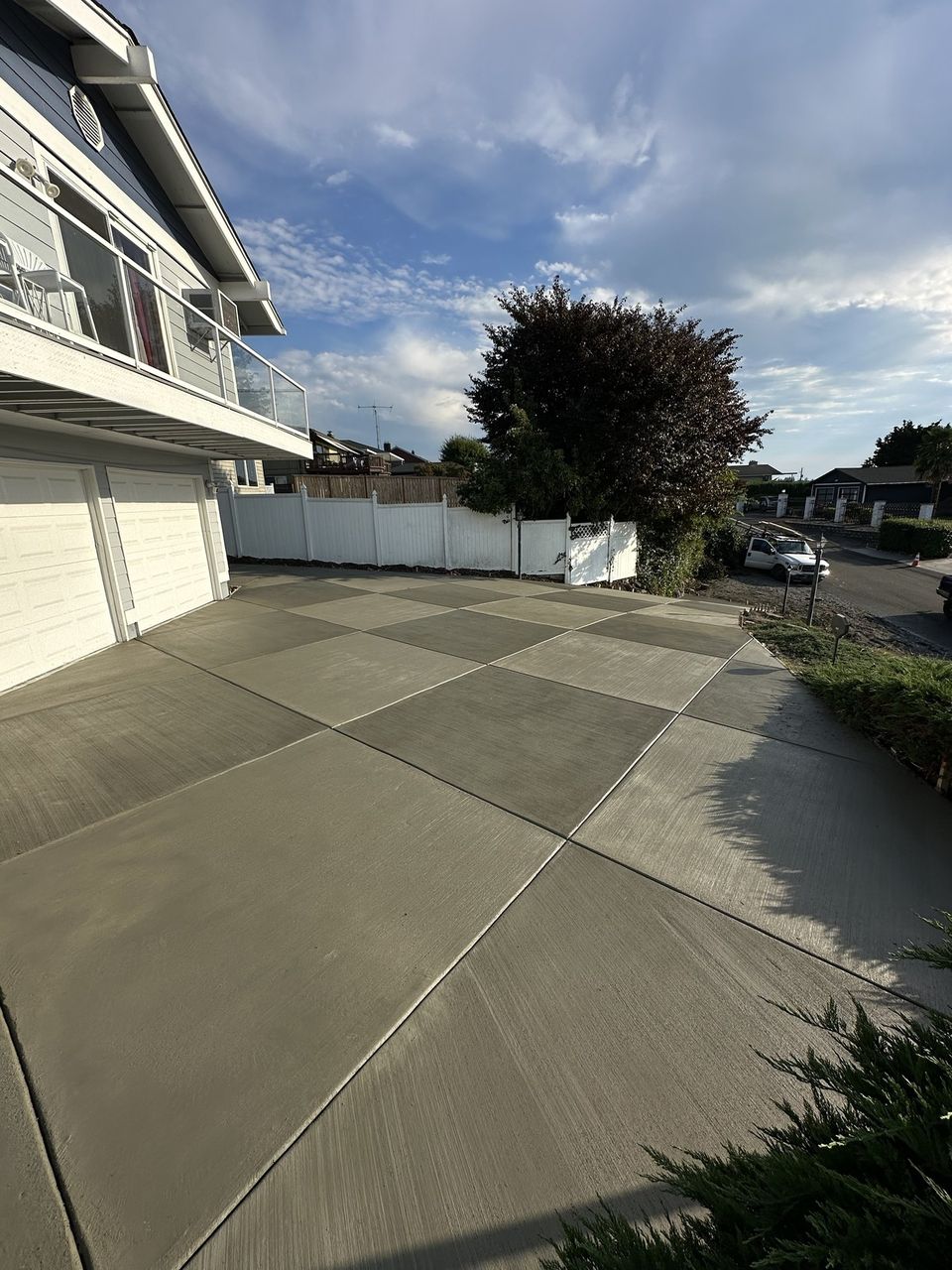
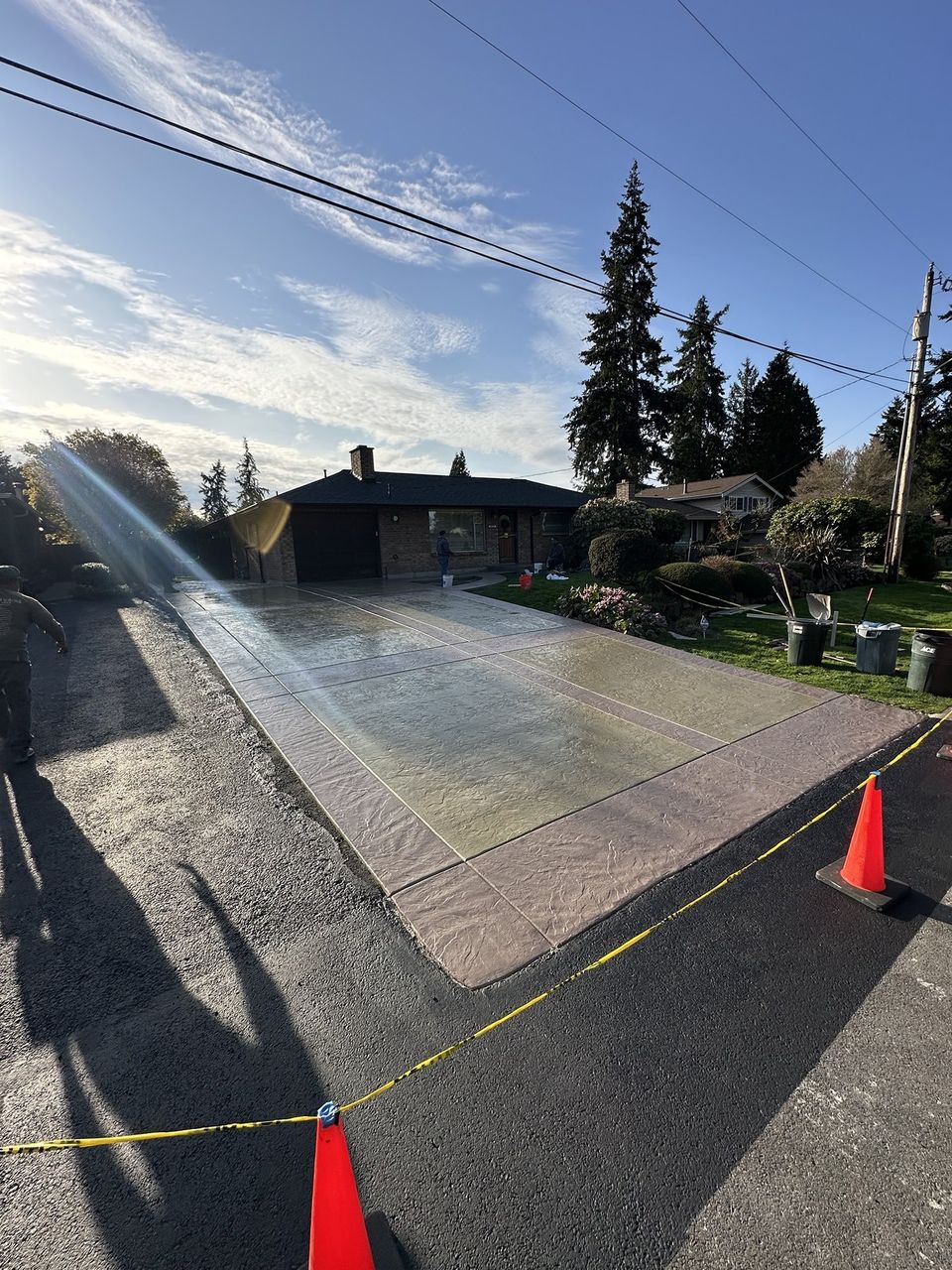
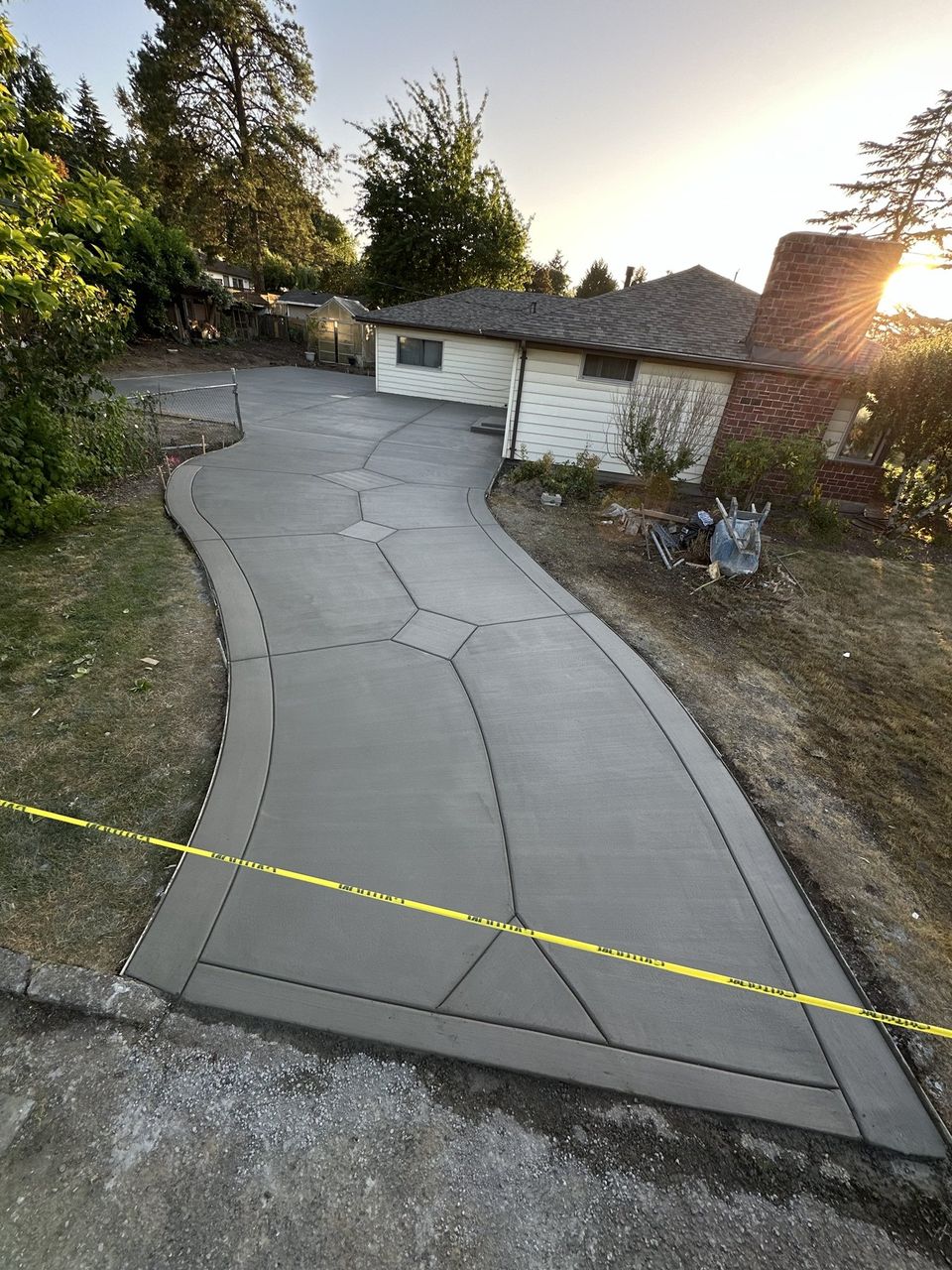


Examples of our work. We build driveways & sidewalks in Bonney Lake and the cities around it. See all of our work
Questions from Bonney Lake homeowners
Does replacing my driveway apron in Bonney Lake need a city permit?
Usually. The city requires a road approach permit before an approach to a city road is built, repaired, or altered, and digging in the right-of-way is permitted separately. Work that stays on your own property is handled differently.
Why is my newer Bonney Lake driveway sinking next to the garage?
On a graded lot the slab may sit over fill, or over a trench that was backfilled loosely, and winter water softens both. If the base has moved, patching will not last. We replace the section and rebuild the base beneath it.
Do I need to keep two parking spaces if I change my Bonney Lake driveway layout?
The city’s residential standards call for two off-street parking spaces for each single-family home, so a new layout should leave room for both. We check any narrowing or planting strip against that rule and your HOA covenants.
Other work in Bonney Lake
- Patios & stairs in Bonney Lake
- Concrete overlays in Bonney Lake
- Retaining walls in Bonney Lake
- Basement waterproofing in Bonney Lake
- Drainage & French drains in Bonney Lake