
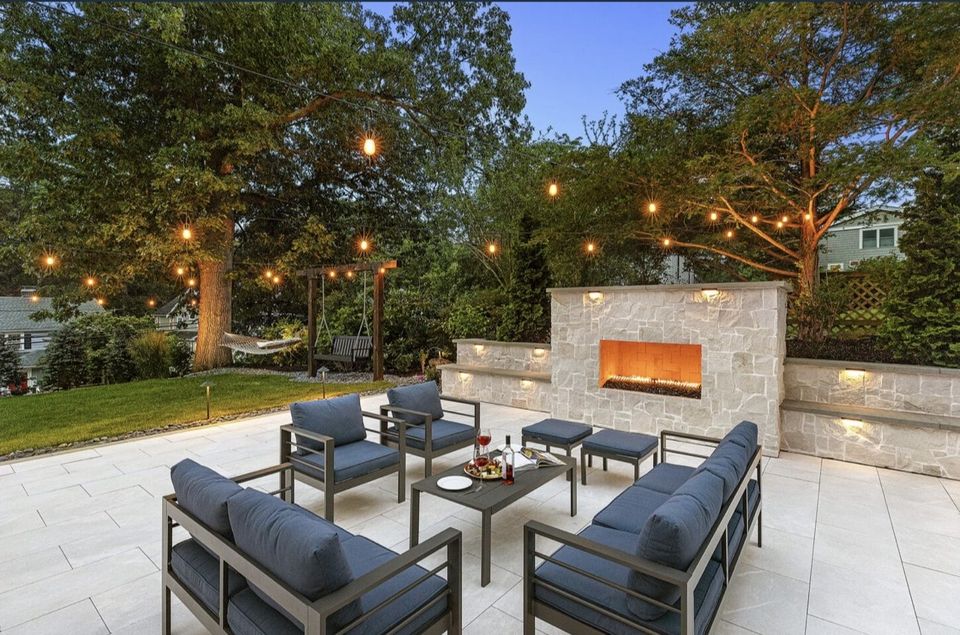
A patio or a set of steps gets used every day and sits out in the rain all winter. We build concrete patios, steps, landings, and outdoor living slabs that stay safe underfoot when wet, look good for years, and drain away from your house. Outdoor living and decorative concrete are the heart of what we do.
What we build
- Patios, fire pit and seating pads, and outdoor kitchen slabs
- Hot tub and spa pads
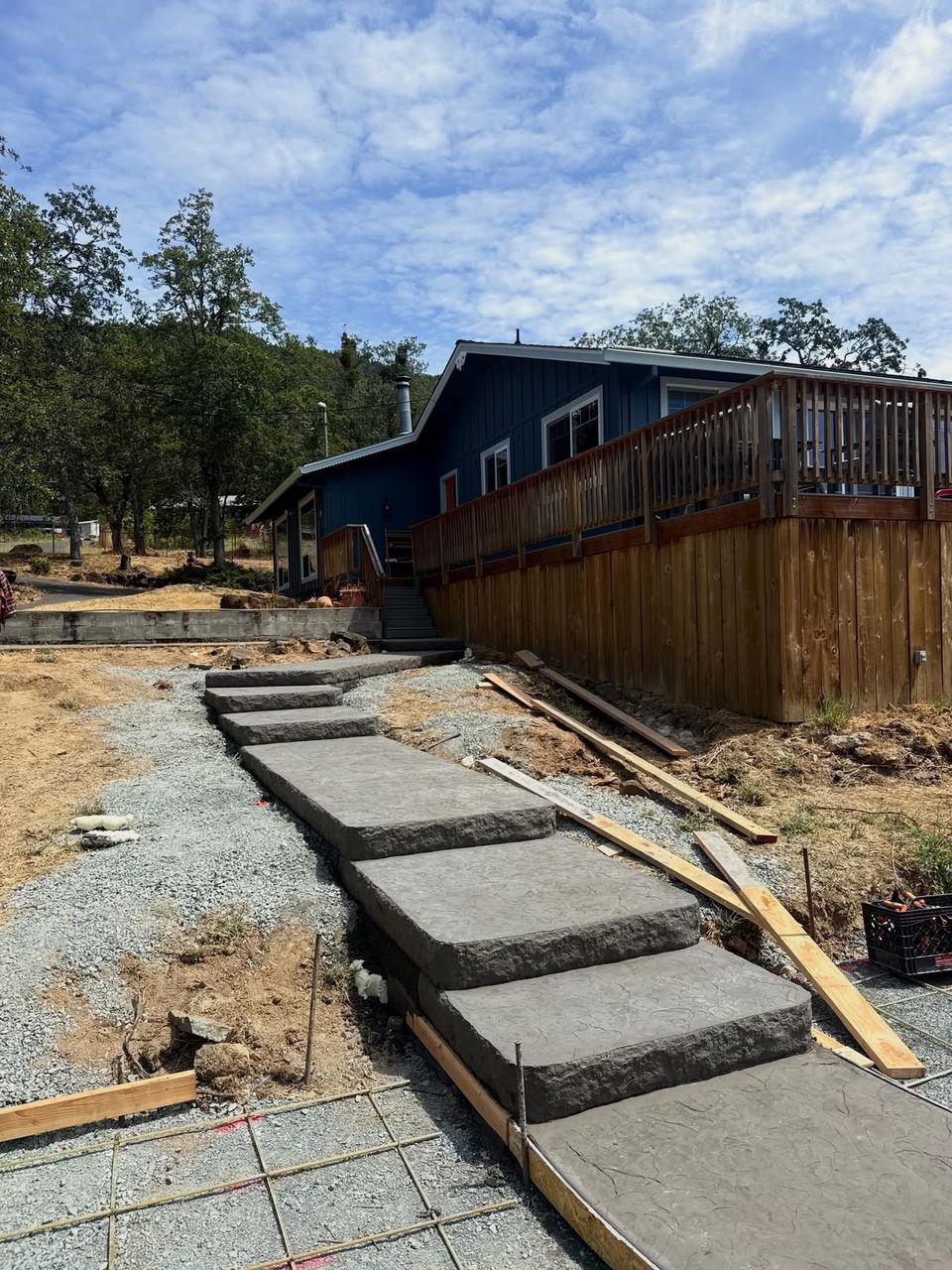
- Exterior steps, landings, and walkways from the house to the yard
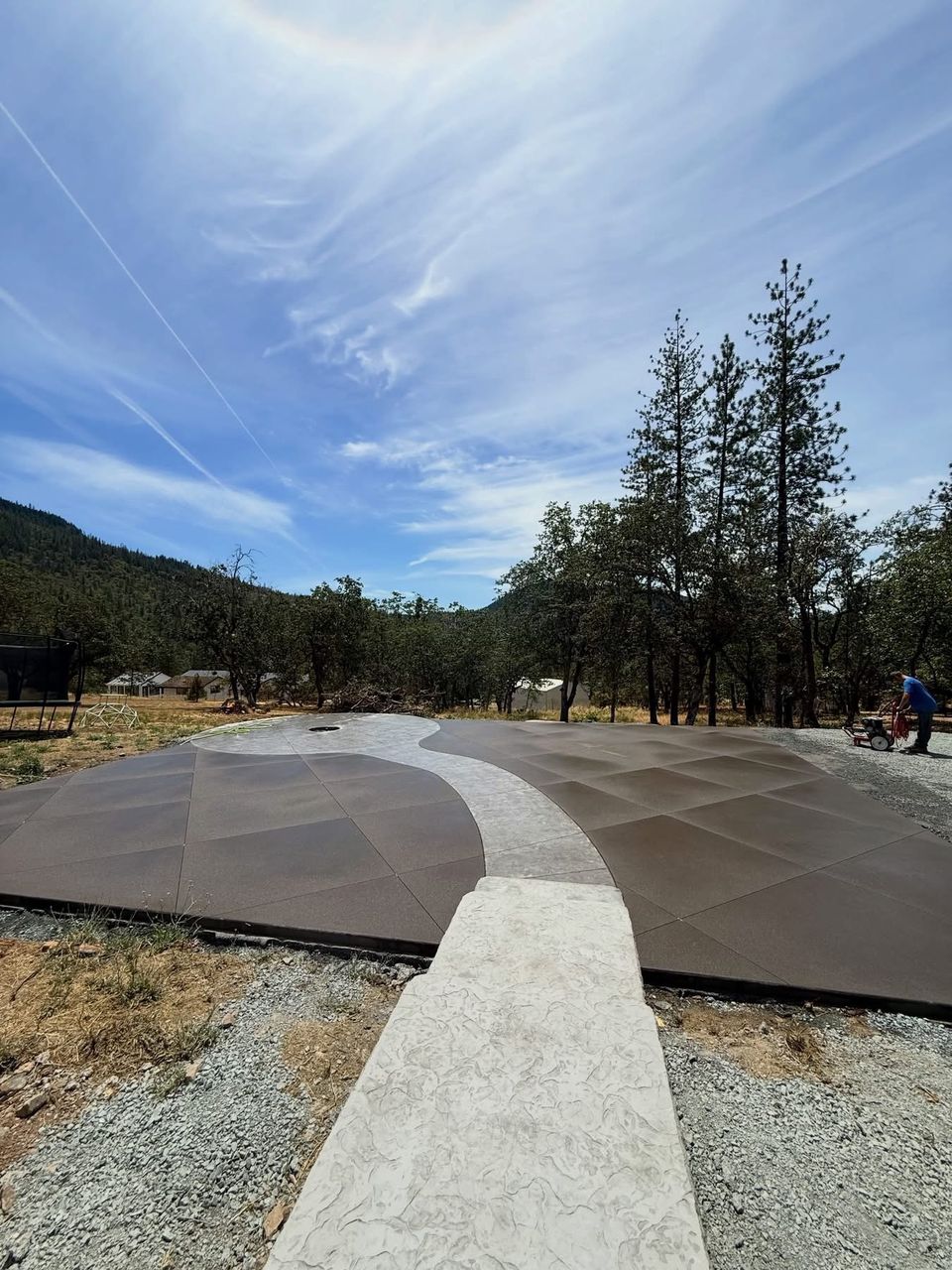
- Stamped, colored, exposed aggregate, and broom finishes
Finish choices for a wet climate
A smooth, steel-troweled surface is slippery when it’s wet. For patios and steps in western Washington, we recommend a broom finish, exposed aggregate, or a stamped pattern with a slip-resistant sealer. Shaded patios grow moss and algae, so a textured surface and an occasional cleaning keep them safe. Color can be mixed through the concrete or applied to the surface as a stain or hardener, and the two look and wear differently.
Stairs and landings
Exterior stairs generally have to meet the residential code for riser height and tread depth. The code caps risers at 7¾ inches and sets a minimum tread of 10 inches, and flights with four or more risers usually need a handrail. Landings should be level enough to be safe and sloped just enough that water doesn’t pool. We lay stairs out before we form them so every riser is the same height, because uneven steps are the ones people trip on.
Drainage comes first
A patio should shed water away from the house, not toward it. Where the patio meets a wall, a door, or a grade change, we plan where the water goes before we form anything. Sometimes that’s a slight slope. Sometimes it’s a channel drain or a French drain at the edge.
Planning the layout
- Where the furniture, grill, and fire feature will actually sit
- Where water will run, and where it will go next
- Gas, electrical, and irrigation lines that have to cross the slab
- Setbacks, lot coverage limits, and HOA rules
Where we do this work
- Concrete Patios & Stairs in Federal Way
- Concrete Patios & Stairs in Edgewood
- Concrete Patios & Stairs in University Place
- Concrete Patios & Stairs in Tacoma
- Concrete Patios & Stairs in Lakewood
- Concrete Patios & Stairs in Puyallup
- Concrete Patios & Stairs in Bonney Lake
- Concrete Patios & Stairs in Auburn
- Concrete Patios & Stairs in Des Moines
- Concrete Patios & Stairs in Kent
- Concrete Patios & Stairs in Milton
- Concrete Patios & Stairs in Spanaway
- Concrete Patios & Stairs in Fife
- Concrete Patios & Stairs in Lake Tapps
- Concrete Patios & Stairs in Covington
- Concrete Patios & Stairs in Maple Valley
- Concrete Patios & Stairs in Renton
- Concrete Patios & Stairs in East Renton Highlands
- Concrete Patios & Stairs in Newcastle
- Concrete Patios & Stairs in Mercer Island
- Concrete Patios & Stairs in Issaquah
- Concrete Patios & Stairs in White Center
- Concrete Patios & Stairs in West Seattle
- Concrete Patios & Stairs in Burien
- Concrete Patios & Stairs in Normandy Park
- Concrete Patios & Stairs in Tukwila
See every city we serve on our service areas page.
Planning a project for the cold months? Read our step-by-step guide to winter concrete pours.
Our work


Common questions
What’s the best concrete finish for a patio in the rain?
A broom finish, exposed aggregate, or a textured stamped pattern with a slip-resistant sealer. All three give your feet something to grip when the surface is wet. We avoid smooth trowel finishes on anything that gets rained on.
How soon can I use a new patio?
Foot traffic is usually fine after a day or two. Wait several days before setting heavy furniture or a grill on it, and a full week before driving anything over it. Cold weather slows all of this down.
Do concrete patios crack?
Concrete can crack, and the goal is to control where. A proper base, reinforcement, and control joints placed to suit the layout make cracks form in straight, intentional lines. A hairline crack along a joint is normal. A wandering crack through the middle of a slab usually points to a base or drainage problem.
Can you build a patio on a sloped yard?
Yes. A slope usually means steps, a retaining wall, or both. We plan the grade first so the patio stays level, drains away from the house, and doesn’t undermine the slope above or below it.