
What stamped concrete is
Stamped concrete starts as an ordinary slab. While the concrete is still workable, the crew adds color, applies a release agent, and presses stamp mats into the surface to leave the pattern. After it cures, the surface is cleaned and sealed.
Color is mixed into the concrete, worked into the surface as a hardener, or applied afterward as a stain. The release agent that keeps the mats from sticking can also leave a second, darker tone in the lines of the pattern.
The pattern is only the surface. How long a stamped slab looks good depends on what is under it and around it: the base, the thickness, the reinforcement, the joints, and where the water goes. That part is the same as for any driveway or patio, and it is where we start.
Patterns in our own work
These are patterns you can see in the photos below.
- Wood-plank patterns, with the grain pressed into each board
- Flagstone patterns on walks, patios, and steps
- Diamond, lattice, and chevron layouts, with border bands in a contrasting color
- Round patios with radial joints, and borders that step along the edge
Our stamped work
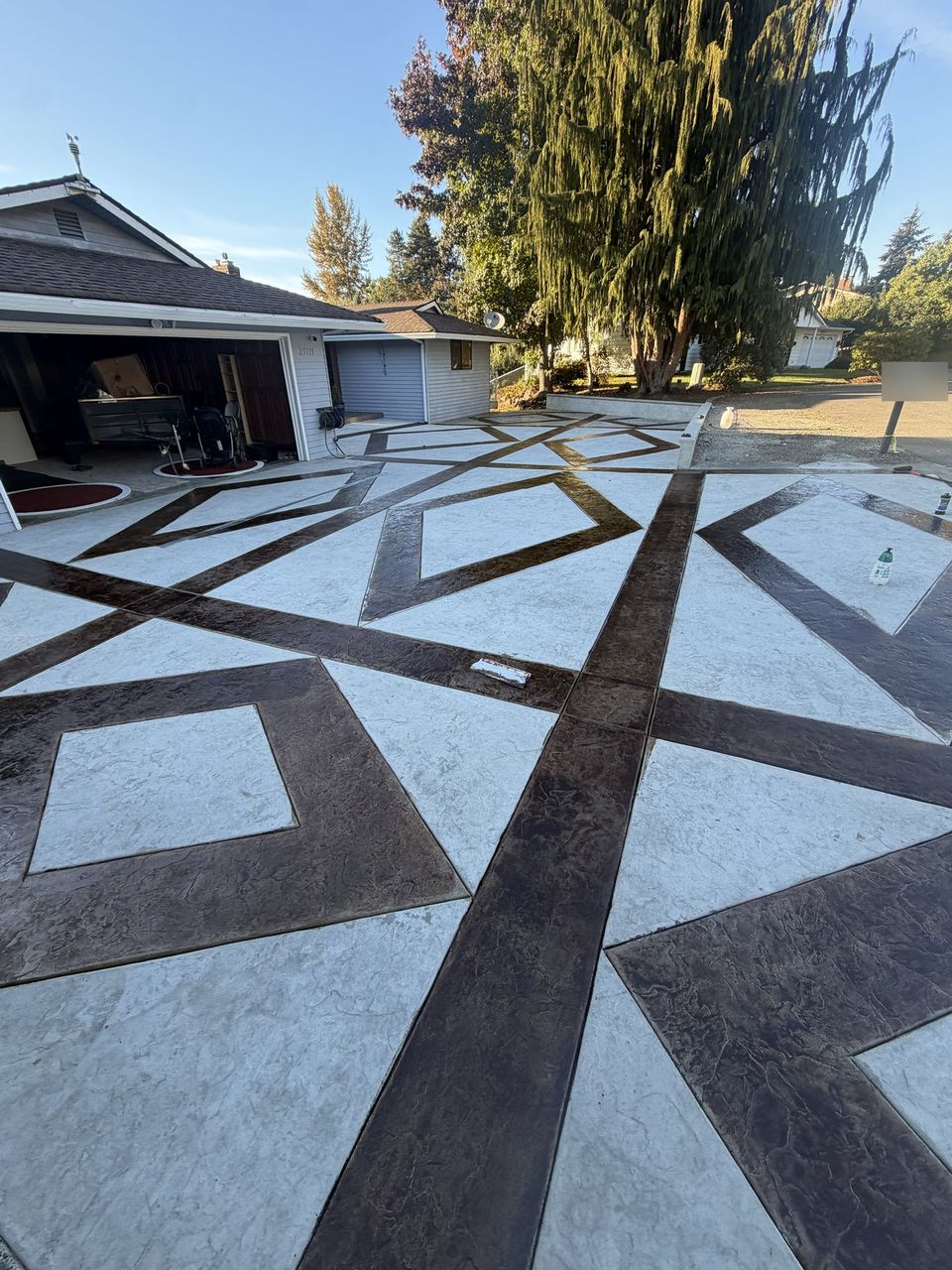
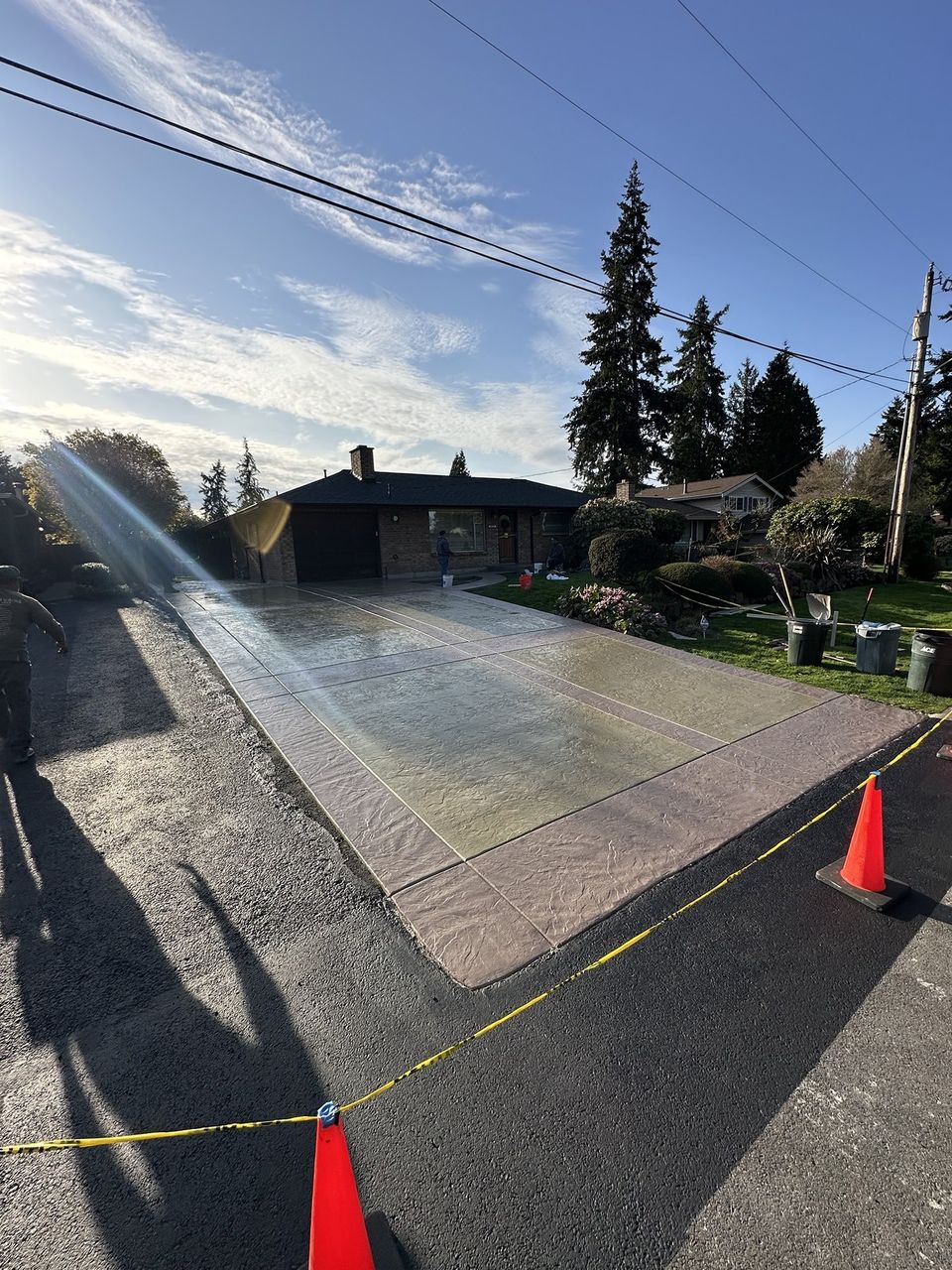
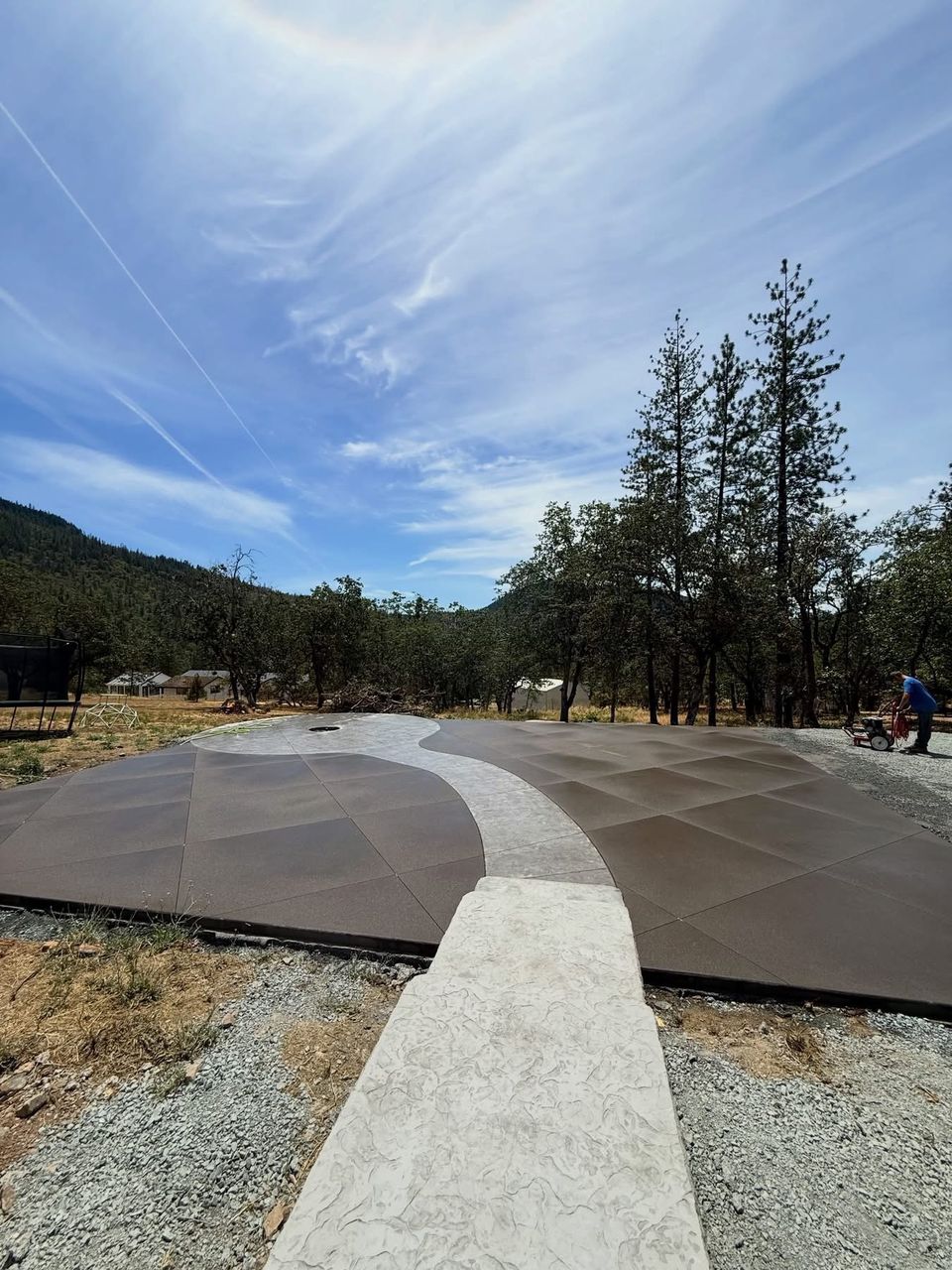
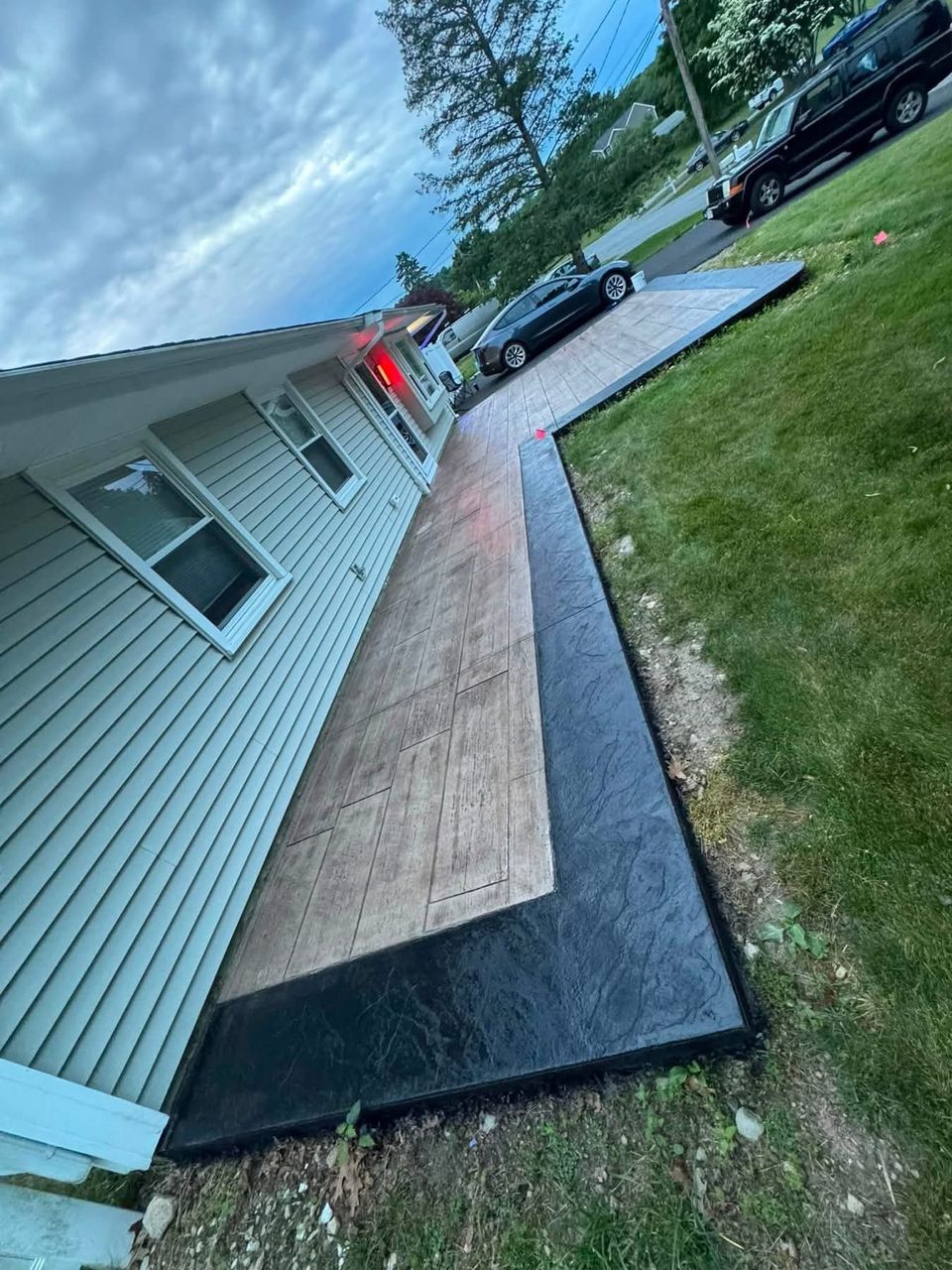
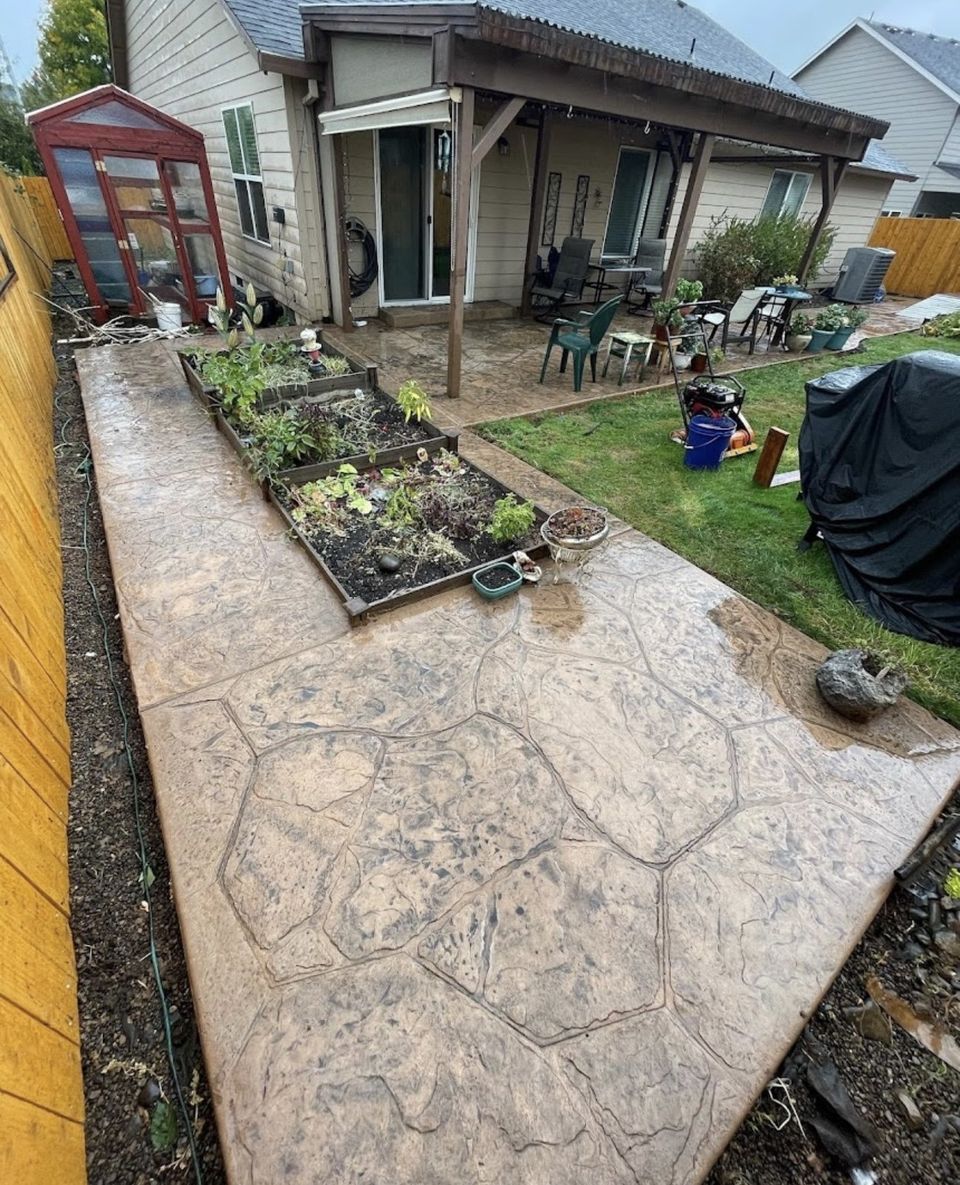
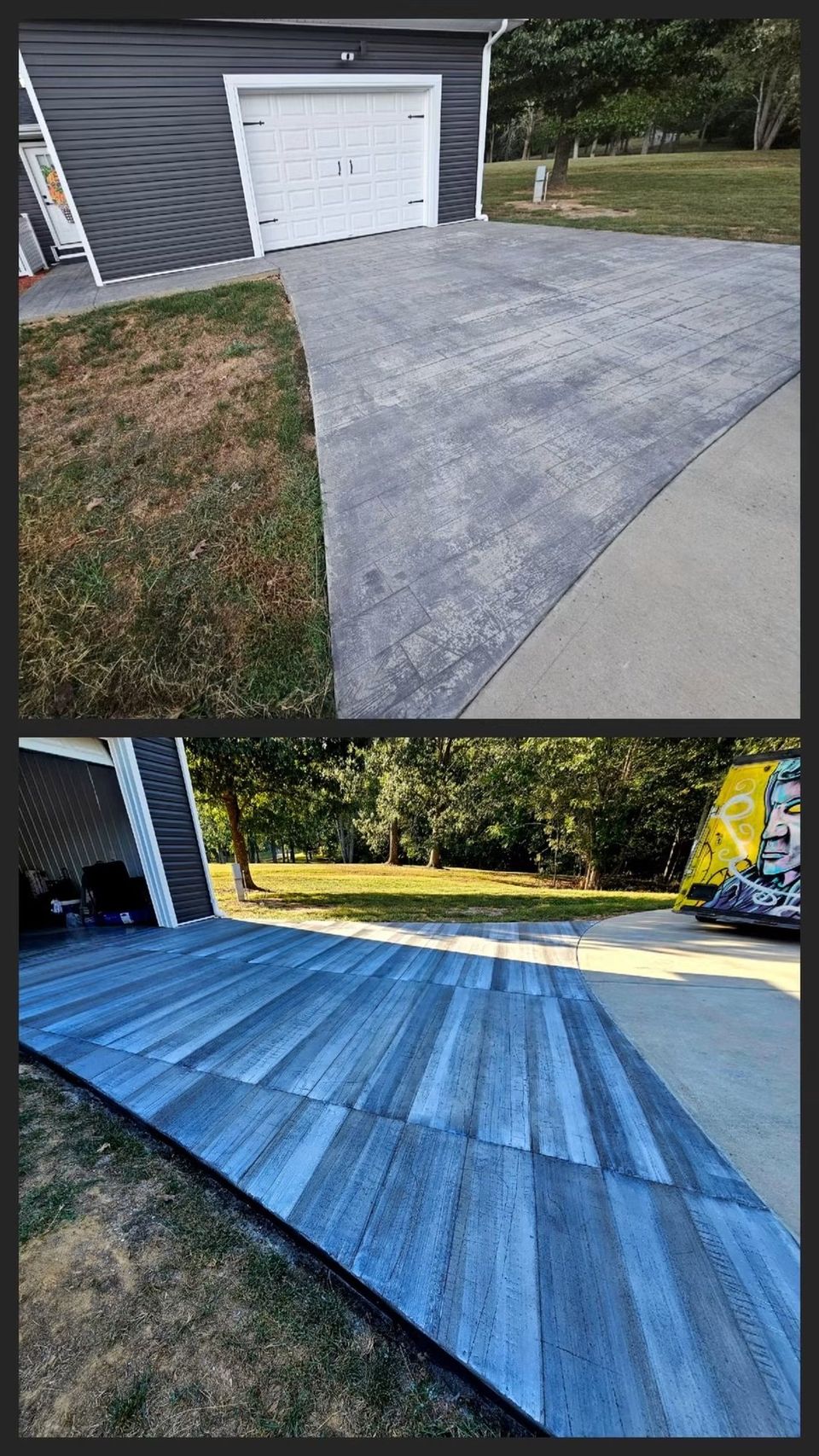


Where stamped concrete fits
We stamp driveways, walkways, patios, porches, pool decks, and the entry areas around them. A stamped border can frame a plain broom-finish field, or the whole surface can carry the pattern. If the surface is for a car, a hot tub, or a stair, the build underneath changes with the load, so we plan that before we pick the pattern. The pages for driveways and sidewalks and patios and stairs cover that side of the work.
Built for a wet climate
Western Washington is wet most of the year, and that decides how a stamped surface behaves.
Traction. A textured pattern can give your feet something to grip, but a film-forming sealer can make any finish slick when it is wet. On steps, pool decks, and shaded areas we recommend a slip-resistant sealer, and we suggest walking on a wet sample before you choose. The answer hub compares finishes when wet.
Moss and algae. Shade and damp grow moss and algae, and deep texture is harder to clean. A pattern that suits a sunny patio can be a poor match for one under trees. We will say so if we think that is your site.
Water. A stamped slab has to shed water like any other. We set the slope and decide where the water goes before we form anything, and a patio should slope away from the house.
Stamped overlay or a new slab
If the existing concrete is sound, a stamped overlay can give it a new surface without tearing it out. An overlay is bonded to the old slab, so it is only as good as the slab underneath. Movement, settlement, or a failed base will crack through it, and old sealers and coatings have to be removed first. If the slab is failing, replacing it is usually the better answer. We look at it in person before we say which. See our concrete overlays page, or read when an overlay is a good idea and when it fails.
Sealing and care
Sealer protects the color and makes the surface easier to clean. It is not a one-time job, but it is not on a calendar either. Reseal when water stops beading and the color looks flat, because sealing too often can build up a film that is hard to remove. Follow the sealer maker’s written instructions for cleaning and resealing. The answer hub explains how often to seal and how color and fading work.
Clean off moss and algae before they make the surface slick (how to do it safely). In winter, skip de-icing chemicals during the first winter and go easy on them after that. Clean sand gives traction instead, and here is why de-icers damage a surface. Planning to pour in the cold months? Read our step-by-step guide to winter concrete pours.
Permits and rules
A stamped surface does not change what your city requires. Work in the public right-of-way, stairs, and retaining walls can all need permits, and the rules differ from city to city. We check before we pour and tell you what applies.
Where we build stamped concrete
Pierce County
King County
- Federal Way
- Auburn
- Des Moines
- Kent
- Covington
- Maple Valley
- Renton
- East Renton Highlands
- Newcastle
- Mercer Island
- Issaquah
- White Center
- West Seattle
- Burien
- Normandy Park
- Tukwila
- North Bend
- Snoqualmie
- Enumclaw
- Black Diamond
- Duvall
- Woodinville
- Sammamish
- Kirkland
- Bothell
- Redmond
- Bellevue
- Kenmore
- Lake Forest Park
- Shoreline
- Carnation
- Fall City
- Vashon Island
- SeaTac
Snohomish County
Island County
Common questions
What is stamped concrete?
It is poured concrete that is colored and pressed with a pattern while it is still workable, so it looks like stone, brick, or wood planks. After it cures it is cleaned and sealed. Underneath, it is a normal concrete slab.
Is stamped concrete slippery when it’s wet?
It can be. The pattern can help your feet grip, but a film-forming sealer can make any finish slick when wet, and moss on a shaded surface is often a bigger hazard in western Washington. On steps, pool decks, and shaded areas we recommend a slip-resistant sealer, and we suggest walking on a wet sample first.
Does stamped concrete crack?
Like any concrete slab, it can. Joints are placed to guide where cracks form, and a good base and reinforcement help, but nothing prevents cracking completely. Repairs are usually visible, because a patch rarely matches the pattern and color exactly.
How often does stamped concrete need to be resealed?
There is no fixed schedule. Reseal when water stops beading and the color looks flat. Sealing too often can build up a film that is hard to remove, so follow the sealer maker’s instructions.
Can you stamp over my existing concrete?
Sometimes. A stamped overlay can go over sound, clean concrete. If the slab is moving, settling, or sitting on a failed base, the overlay will crack along with it, and replacing the slab is usually better. We look at it in person before we recommend either.
How much does stamped concrete cost?
It depends on the size, the pattern and color, the site, and how much prep the ground needs, so we price each job after we see it. Quotes are free, and we put the scope and the price in writing.
Do you build stamped concrete near me?
We build in Federal Way and across western Washington. The list below shows every city we serve, and if you are not sure about your address, call us and ask.