
Basement waterproofing in Des Moines: what to know
Many Des Moines lots tilt toward the Sound. Rain that soaks in above a house moves downslope and loads the back wall of any lower level cut into the hill. Whether a house has a full basement, a daylight basement, or a crawlspace varies by lot. On the flatter plateau, gutters, grading, and a silted footing drain are the likelier causes.
Most homes here were built between 1950 and 1980, according to the city’s housing assessment, so clogged or collapsed footing drains are worth ruling out. The other local factor is the dig. An exterior excavation along a whole foundation moves a lot of soil, and on a steep lot it sits close to the hillside rules.
Permits and rules in Des Moines
Sealing walls, regrading, and gutter work generally sit outside the permit system. The city regulates the digging: clearing, grading, or filling needs a grading permit unless it fits the exemptions, which stop at 50 cubic yards of grading and fill. In a landslide hazard area, the city’s hazards analysis has to show that a drain outlet adds no surface water or sediment to neighboring properties. We look up the critical areas mapping and our excavation volume with the city before we quote.
Rules change and vary by parcel, so we confirm the current requirements with the city before we start.
How we approach it
- Find where uphill water enters before opening the ground along the slope-side wall
- Estimate the excavation volume early, since 50 cubic yards is the grading line
- Route new drain water away from bluff edges and off neighbors’ lots
- Rule out clogged footing drains and downspout discharge on 1950s to 1980s houses
For the full process, see our Basement Waterproofing page.
Our basement waterproofing work, serving Des Moines
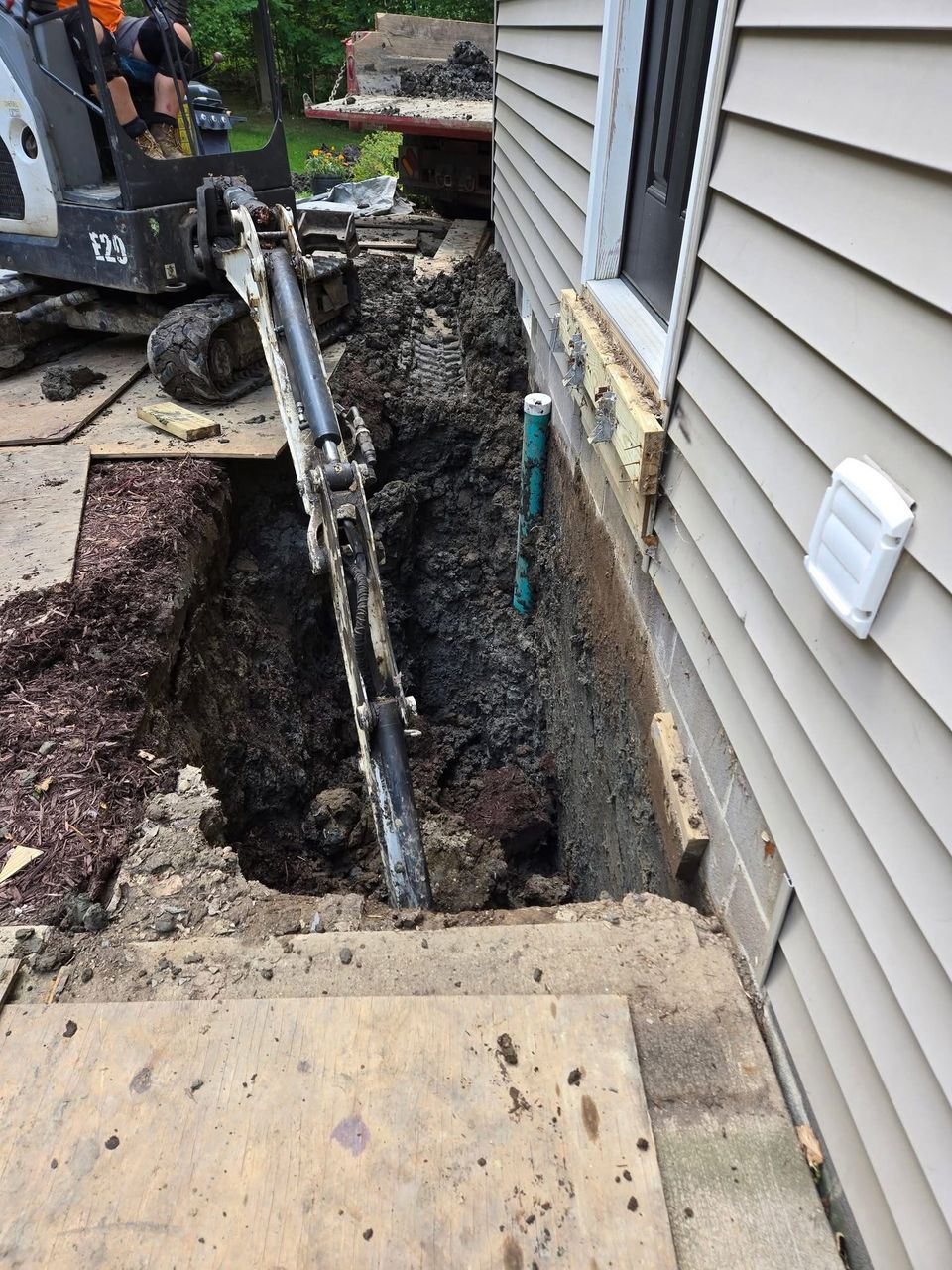
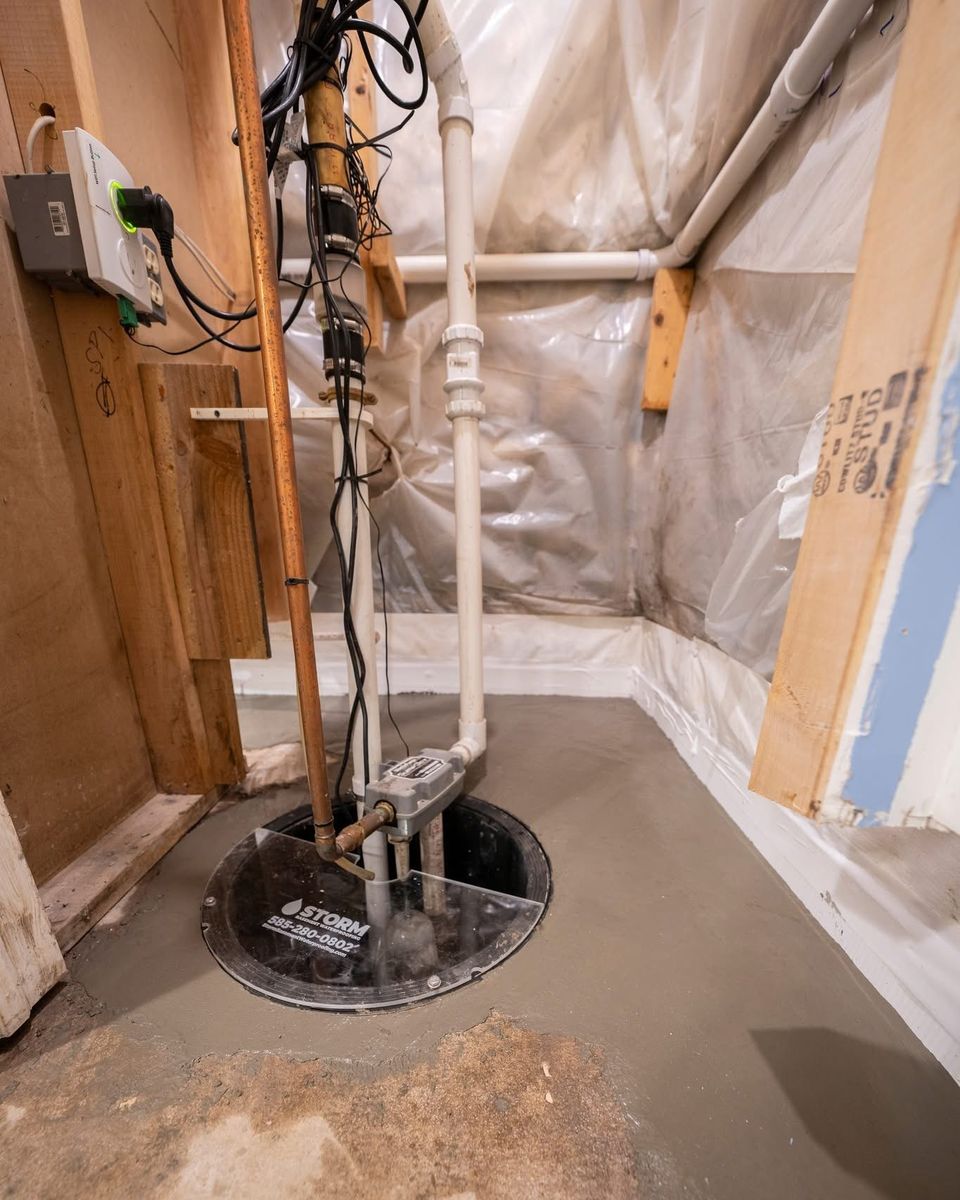


Examples of our work. We build basement waterproofing in Des Moines and the cities around it. See all of our work
Questions from Des Moines homeowners
Why is my Des Moines basement wet only after a long rainy stretch?
After weeks of rain, saturated hillside soil pushes water toward a lower level and finds any crack or weak footing drain. A seasonal pattern like that points to groundwater or a drain problem, not a plumbing leak. We trace it from the uphill side.
Does digging around my Des Moines foundation need a permit?
Possibly. The grading code requires a permit for clearing, filling, or grading unless the job fits its exemptions. Digging all the way around a foundation can approach the 50 cubic yard limit, so we estimate the volume and ask the city how it counts it.
My Des Moines house sits on a bluff edge. Is waterproofing the real issue?
Not always. Near a bluff or ravine the larger concern is slope stability and where water leaves the lot. The code asks for a buffer from the edge and an engineer’s or geologist’s certification in hazard areas. We start with the mapping and the drainage path.
Other work in Des Moines
- Driveways & sidewalks in Des Moines
- Patios & stairs in Des Moines
- Concrete overlays in Des Moines
- Retaining walls in Des Moines
- Drainage & French drains in Des Moines