
Basement waterproofing in Issaquah: what to know
The valley floor rests on several hundred meters of glacial and postglacial sediment, and the city notes that floodplain regulations did not exist in Issaquah before 1980. A valley house older than that was built before any floodplain rules applied. King County reports major Issaquah Creek flooding in February 2020, so a basement that took water then needs a different diagnosis than one that only gets damp.
Slope lots call for a different look: loose soil over dense till sends water sideways into the uphill wall. And where a coal mine hazard study classifies ground as moderate, one consultant’s report on file lists crawlspace construction instead of slab-on-grade, and no basements, as mitigation. The foundation on such a lot may be a crawlspace, which changes the repair.
Permits and rules in Issaquah
Any construction inside the 100-year floodplain needs a Flood Hazard Permit from Community Planning and Development, and the Site Work permit bundles clearing and grading with water, sewer, and storm utility work. A footing drain also needs a legal outlet, never a neighbor’s lot or the sanitary sewer. Before we quote, we confirm with the Permit Center whether the trench along your wall, or its outlet, brings in either permit.
Rules change and vary by parcel, so we confirm the current requirements with the city before we start.
How we approach it
- Check the 100-year floodplain layer before opening ground on valley-floor lots
- Dig a test pit uphill to see whether water rides along dense till
- Ask whether a recorded coal mine hazard covenant exists on the parcel
- Settle a legal drain outlet on your own lot before trenching the footing
For the full process, see our Basement Waterproofing page.
Our basement waterproofing work, serving Issaquah
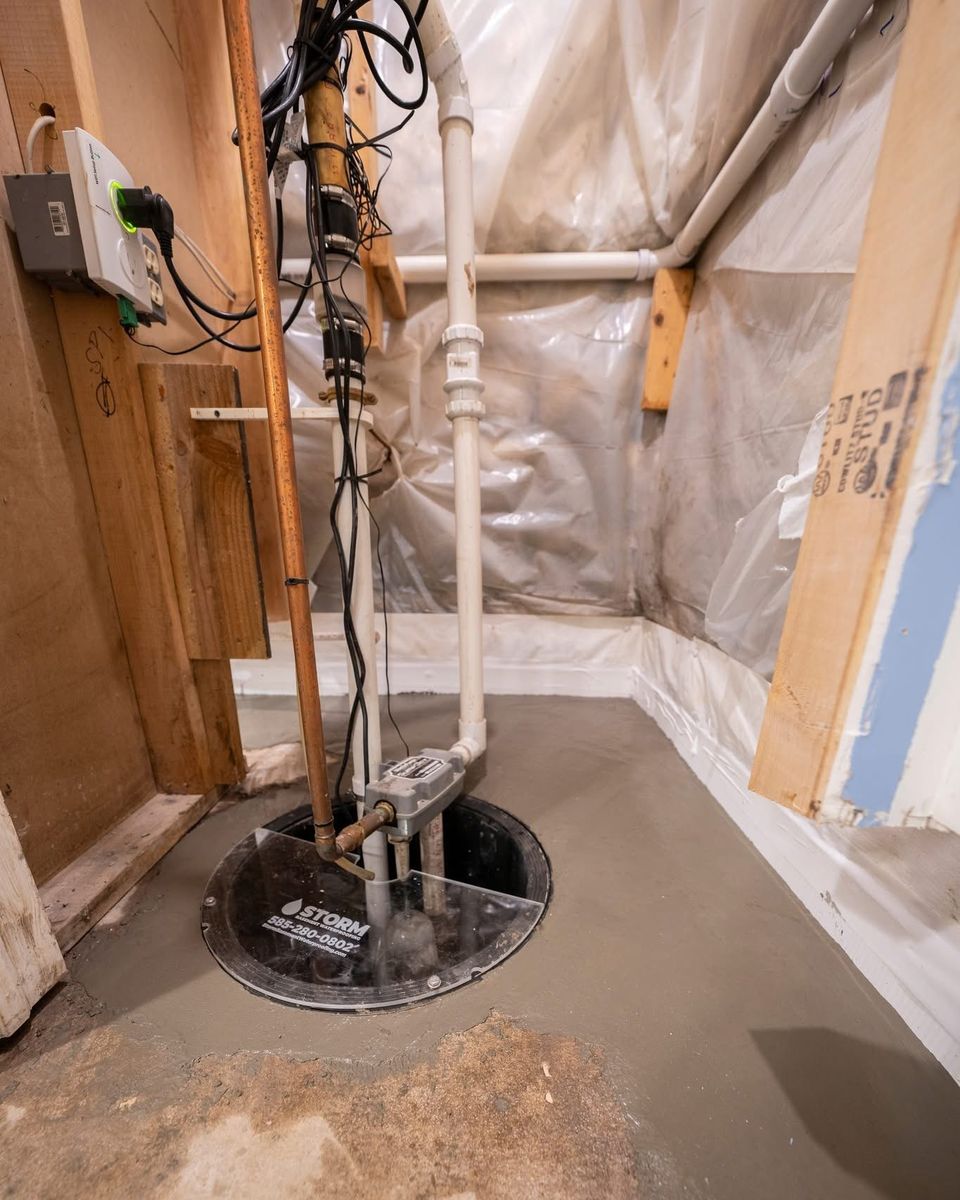
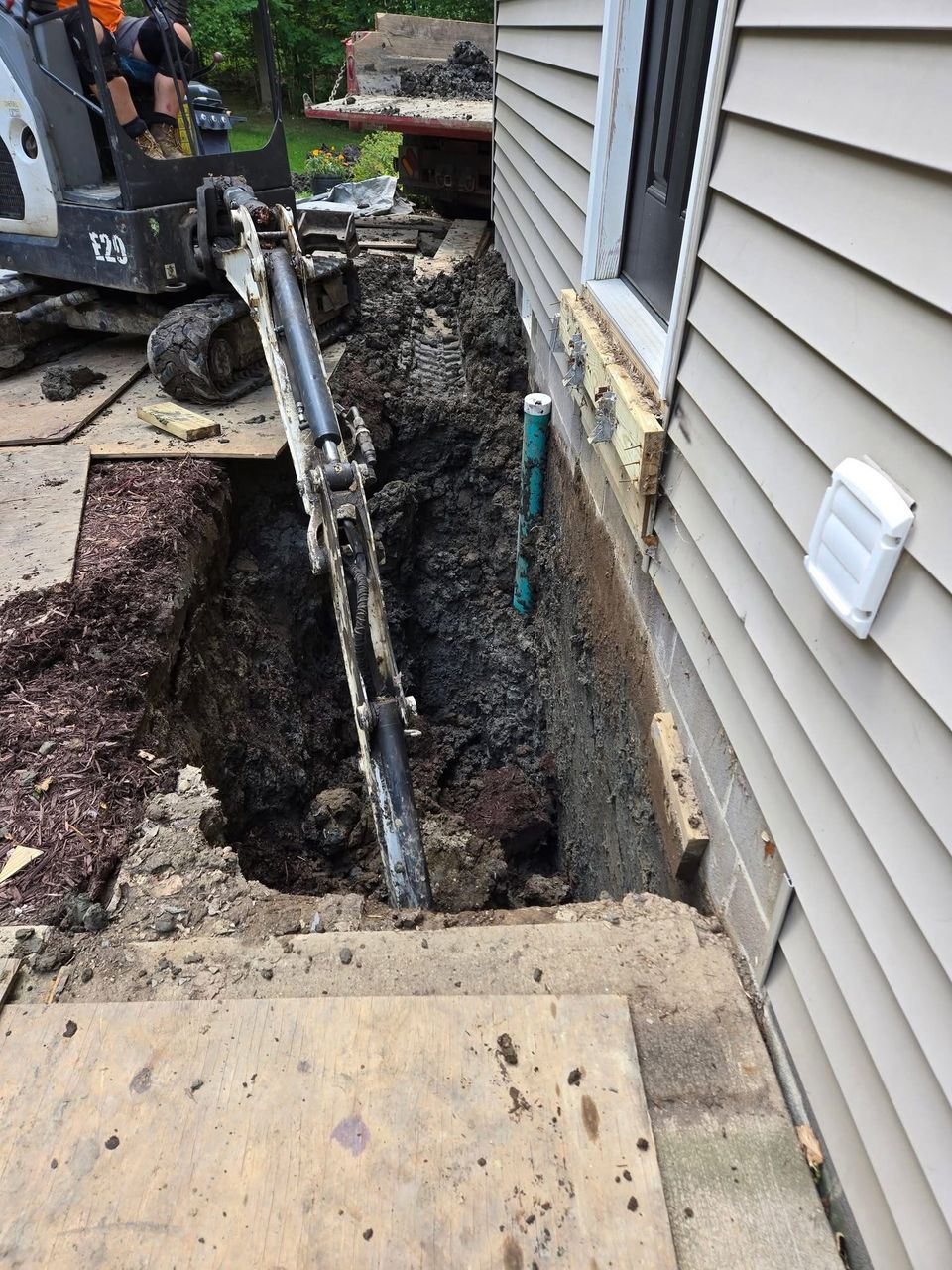


Examples of our work. We build basement waterproofing in Issaquah and the cities around it. See all of our work
Questions from Issaquah homeowners
Near an Issaquah creek, is a wet basement a flood problem or a drainage problem?
It can be either. If the parcel is in the mapped 100-year floodplain, construction there needs a Flood Hazard Permit, and flood maps often cannot show which side of the line a property is on. We check the map first, then the gutters, grading, and footing drain.
Does a coal mine hazard area change how I waterproof my Issaquah foundation?
It can change what you have and what you can do. A consultant’s report on file with the city lists crawlspaces instead of slab floors, and no basements, as mitigation in moderate zones. We ask the Permit Center about deep digging in a mapped area first.
Can I run my footing drain to the creek behind my Issaquah house?
Not on your own. Streams carry buffers under the critical areas chapter, and drain water must reach a legal outlet, not a neighbor’s lot or the sanitary sewer. We look for an outlet on your own lot and confirm creek-side limits with the city.
Other work in Issaquah
- Driveways & sidewalks in Issaquah
- Patios & stairs in Issaquah
- Concrete overlays in Issaquah
- Retaining walls in Issaquah
- Drainage & French drains in Issaquah