
Retaining walls in Lakewood: what to know
A wall’s job here is often to hold a cut. Clean sand and gravel will not stand in a steep bank, so a yard dug into a slope ravels unless something retains it. The same gravel is a strong bearing layer for a footing, and it drains, which lowers the pressure behind a wall compared with wet till.
Water still gets a vote. Roof and driveway runoff dumped behind a wall, an irrigated lawn above it, or high groundwater on a lakeside lot can load a wall that sits in free-draining soil. Near Chambers Creek, the Clover Creek floodplain, and the lakes, location rules shape what can be built before the engineering does.
Permits and rules in Lakewood
Lakewood’s building handout exempts upland walls up to 4 feet, measured from the underside of the footing to the top of the wall, unless they carry a surcharge. It lists underground stormwater infiltration facilities as one example, so a wall beside a drywell or infiltration trench can lose the exemption. Taller walls need a permit, usually with engineering. Cuts, slope buffers, and shoreline setbacks add rules. We confirm which apply before we quote.
Rules change and vary by parcel, so we confirm the current requirements with the city before we start.
How we approach it
- Map slope, shoreline, flood, and aquifer layers for the parcel before sketching
- Dig out loose fill and set footings on undisturbed native gravel
- Keep roof and driveway runoff out of the backfill zone
- Install drain rock and perforated pipe with an outlet planned in advance
For the full process, see our Retaining Walls page.
Building in the cold months? See our guide to winter concrete pours.
Our retaining walls work, serving Lakewood
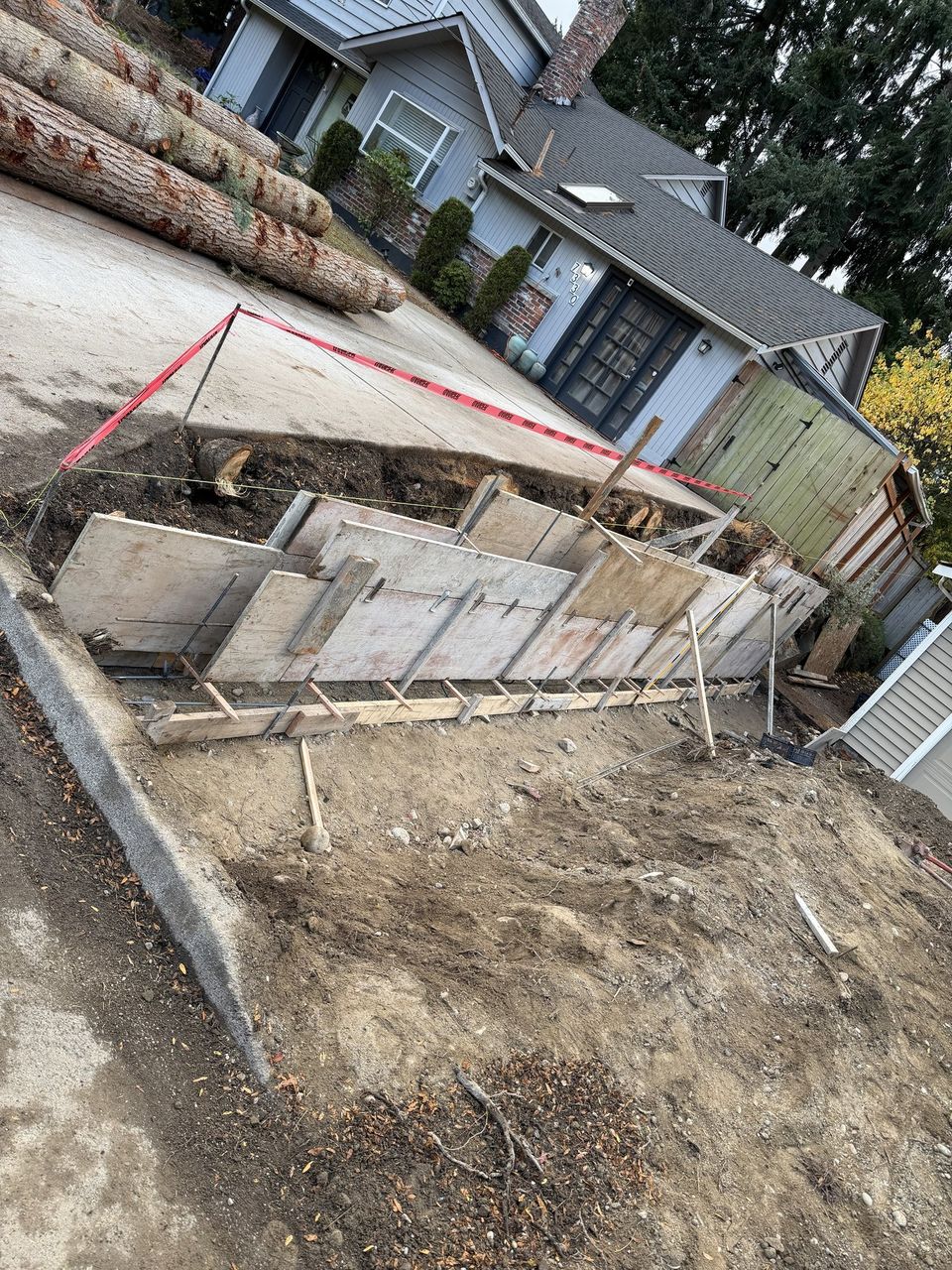
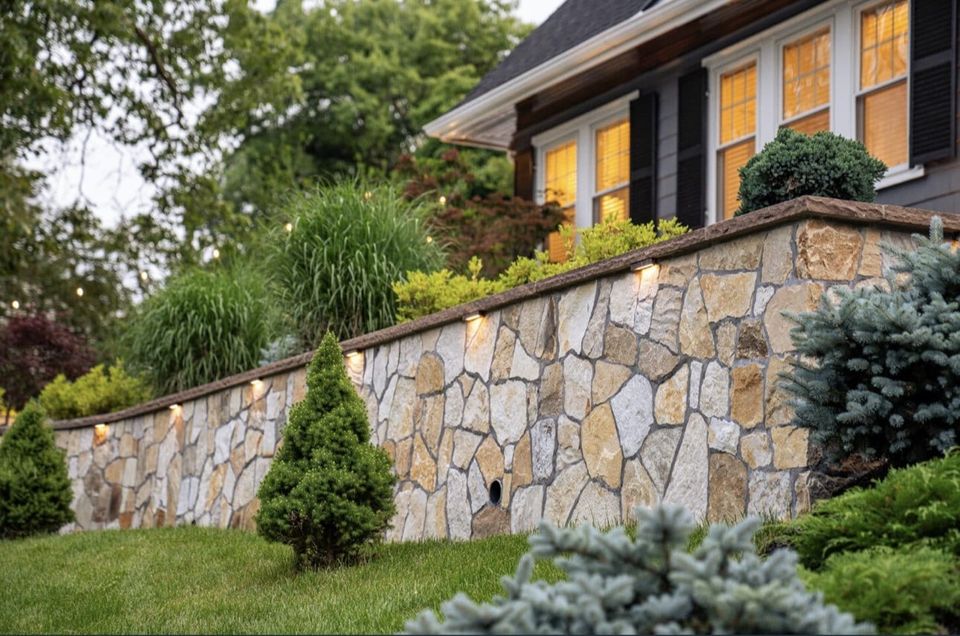
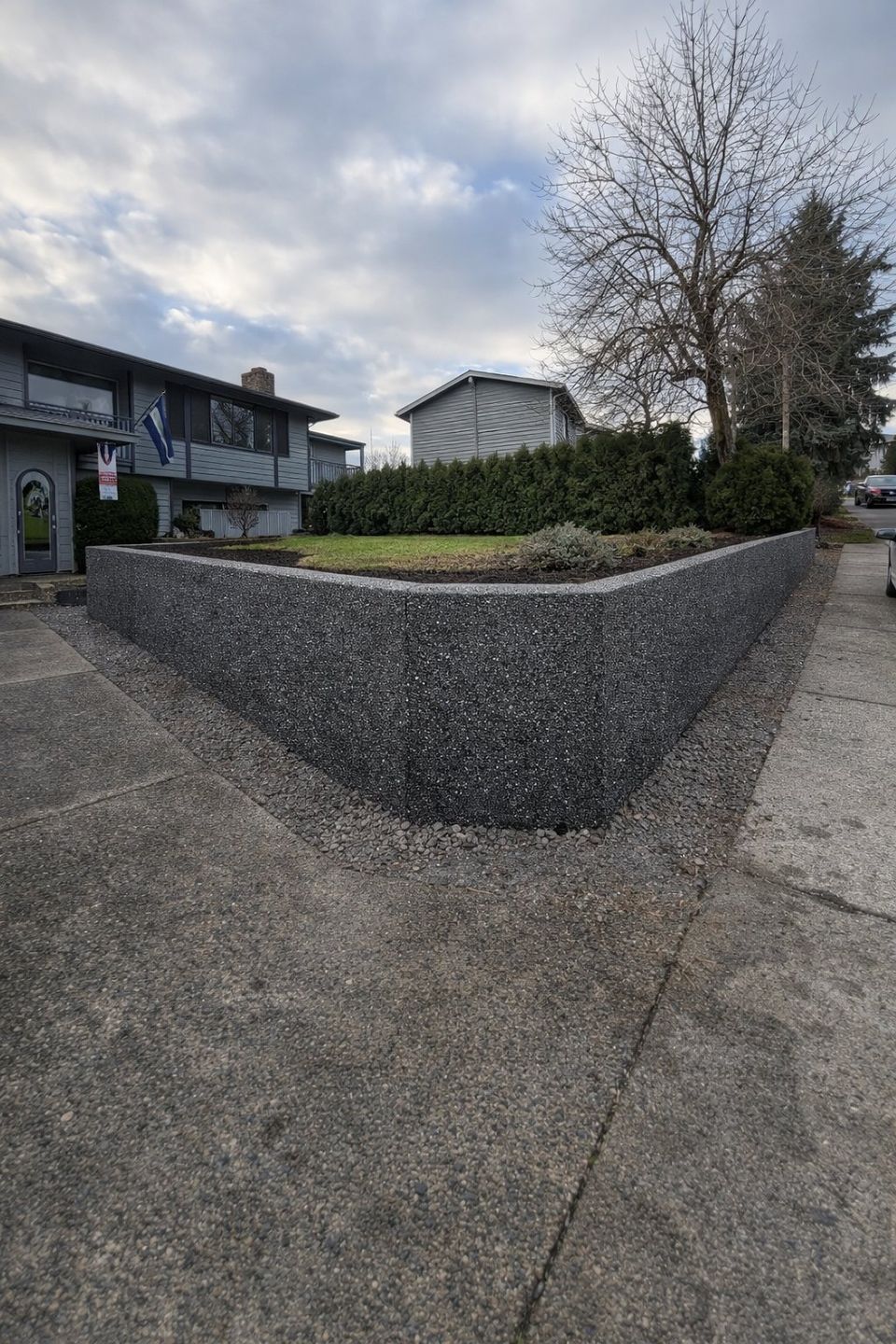


Examples of our work. We build retaining walls in Lakewood and the cities around it. See all of our work
Questions from Lakewood homeowners
How tall can a retaining wall be in Lakewood without a permit?
The city’s handout exempts upland walls up to 4 feet, measured from the base of the footing, if nothing heavy sits above them. Walls near water, taller walls, and walls beside a driveway or infiltration facility are different. We check the parcel before we quote.
Do I need a geotechnical report for a wall near a slope in Lakewood?
Possibly. The city’s site development rules call for a geotechnical analysis when grading is within 200 feet of a slope steeper than 30 percent, or when staff see a hazard. Mapped landslide and erosion areas also require one. A Washington professional engineer or engineering geologist prepares it.
Can a wall hold back a sandy bank on a Lakewood lake lot?
Yes, but lake lots add steps. A wall near the water can be treated as shoreline stabilization, which the city’s shoreline program restricts for new development, and fill is limited in mapped flood areas. A wall set back from the water’s edge is easier to approve.
Other work in Lakewood
- Driveways & sidewalks in Lakewood
- Patios & stairs in Lakewood
- Concrete overlays in Lakewood
- Basement waterproofing in Lakewood
- Drainage & French drains in Lakewood